Reciprocal Tariffs Announced – Liberation or Obliteration Expected?
Key Updates
In a long-anticipated announcement, President Trump declared reciprocal tariffs on 180 countries. Any country not covered in the list will now be subject to a default 10% tariff.
The most heavily affected nations include China, the EU, Japan, Vietnam, and India. For China, these new tariffs are layered over pre-existing duties, resulting in an effective tariff rate of 54%.
Auto import tariffs, expected to remain at 25%, will be officially announced later today.
Baseline tariffs kick in at midnight this Saturday, while reciprocal tariffs are set to go live from April 9th, subject to further negotiations.
What is a Tariff?
A tariff is a form of tax levied on imported goods and services, usually borne by the buyer. This increases the base price of imports, making them less competitive when compared to domestic alternatives.
Governments typically impose tariffs for three key reasons:
To protect new or struggling domestic industries.
To reduce trade deficits.
To boost government revenues.
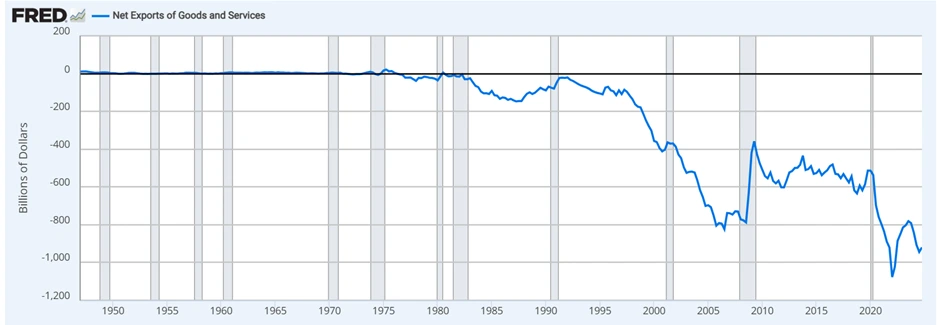
A trade deficit occurs when a country imports more than it exports. The United States, historically a net importer, runs a significant trade deficit.
This new reciprocal tariff policy is aimed at revitalising domestic industries (especially manufacturing) and narrowing the trade imbalance.
Will Tariffs Reduce the US Deficit?
Tariffs can sometimes help balance trade, but only under the right conditions:
The domestic industries being protected must be capable of becoming competitive.
The country must be able to produce at lower costs and deliver on quality.
However, when a country lacks cost competitiveness, tariffs often backfire. Prices rise across the board, triggering inflation, and diplomatic ties with trade partners may suffer long-term damage.
Why Now?
President Trump believes the US needs a manufacturing revival to regain jobs lost during decades of globalisation. Since the 1980s, many American companies have moved operations overseas, drawn by lower wages in countries like China, India, and South Korea.
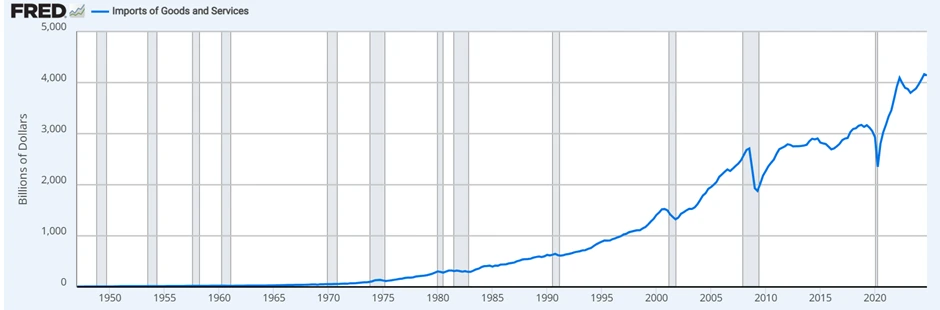
This offshoring of labour, combined with the growing ease of global trade, has deepened the US’ trade deficit over time. Today, imported goods make up nearly half of all goods purchased in America.
Magnitude of Imports (1950–2024)
Magnitude of Net Exports (1950–2024)
Source: FRED | For Illustrative Purposes Only
Trump’s Tariff Formula
While most tariff structures are the result of complex multilateral discussions, the Trump administration opted for a more formulaic approach.
A flat 10% tariff was imposed on all countries. Then, for countries with which the US has a deficit, the following formula was used:
(Trade Deficit / Imports) ÷ 2
This figure, according to the administration, reflects what the US believes it is being “charged” by others—and applying half of that as a tariff is “reciprocal”.
However, this formula was inconsistently applied. Even countries like the UK, where the US runs a trade surplus, were hit with a flat 10% tariff.
Will It Work?
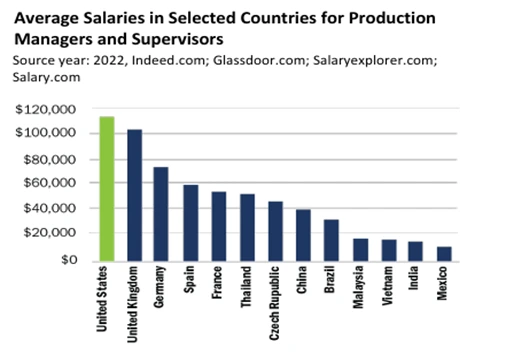
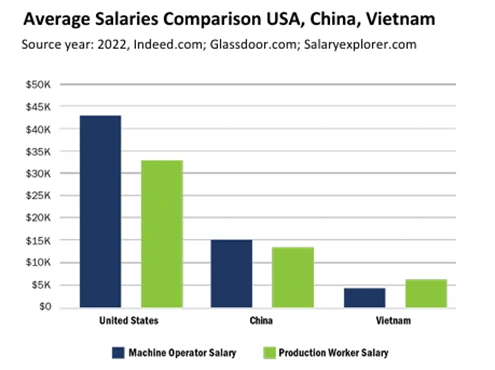
In short, probably not—mainly due to America’s lack of cost competitiveness. A 2022 report from the Reshoring Institute highlights how expensive US manufacturing labour is compared to peers.
This makes it difficult for domestic producers to offer goods at prices competitive with imports. Without affordable substitutes, higher import tariffs mean consumers pay more, particularly impacting lower-income households. Tariffs act as a regressive tax in this context.
Given the US economy’s reliance on imports for household consumption, these tariffs are expected to drive inflation higher.
Diplomatic Fallout
Besides economic consequences, diplomatic tensions are flaring. Trade partners like Canada, Mexico, and the EU have retaliated with tariffs of their own, making US exports pricier. In some markets, American products are being actively boycotted—further worsening the trade imbalance.
Economic Impact
As net exports decline, aggregate demand is expected to fall, dragging down real GDP growth. While some fear a recession, analysts highlight the underlying strength of the US labour market, citing low layoffs and steady job creation.
Fed Chair Jerome Powell has stated that soft sentiment data shouldn’t be overinterpreted. Unless consumer spending collapses, a mild slowdown—not a recession—is more likely.
Technical Analysis
Markets have entered a risk-off mode in response to these announcements. Equities are facing downward pressure, while safe-haven assets like US Treasuries, the Japanese yen (JPY), the Swiss franc (CHF), and precious metals are becoming more attractive.
With inflation set to rise, the Fed is unlikely to lower rates in the near term. Quantitative tightening is expected to continue, albeit cautiously.
Volatility will likely remain high until April 9th, when the reciprocal tariffs go into effect and new rounds of negotiation begin. Until then, equities may continue to correct.
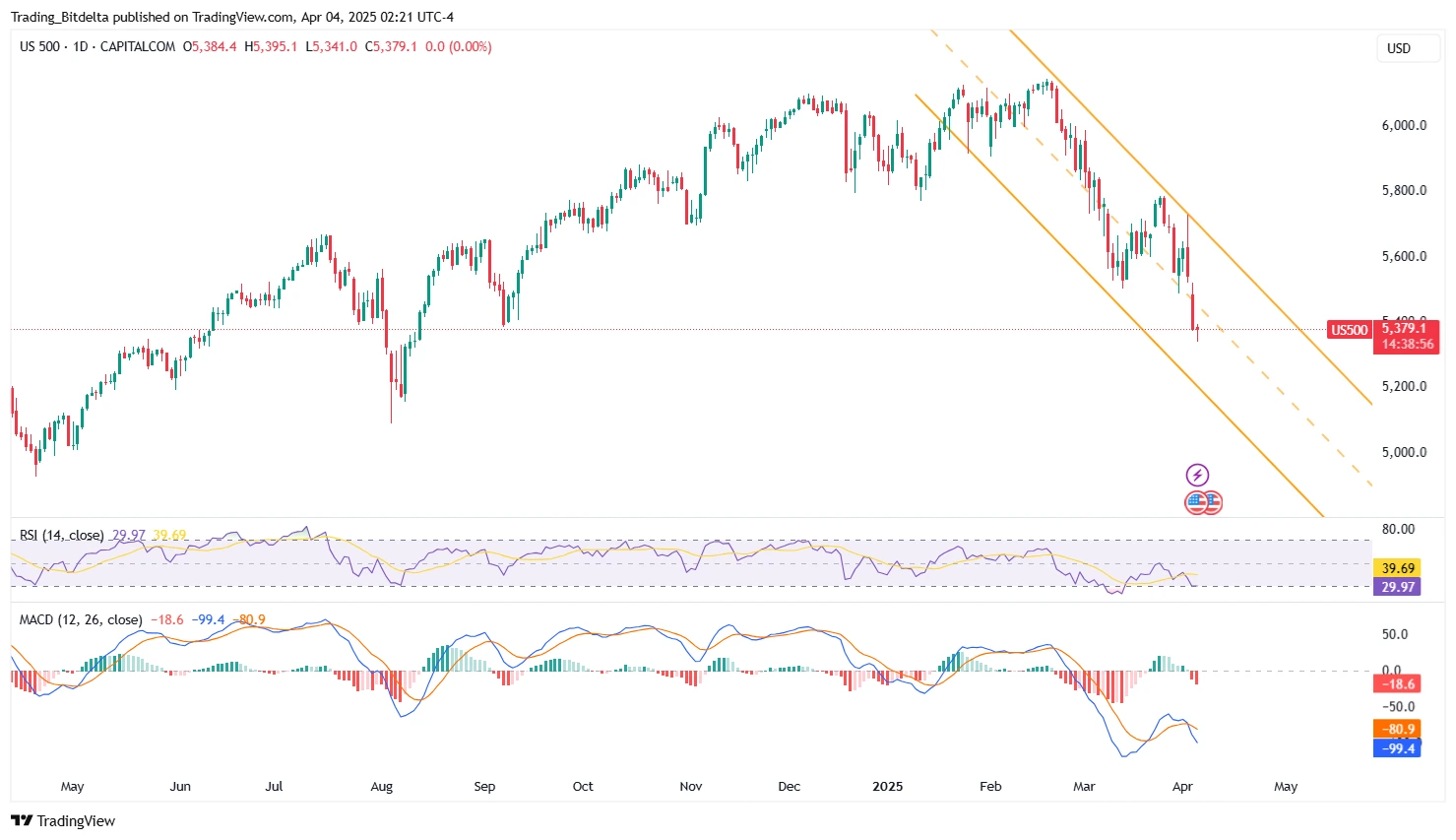
S&P 500 Trend
Source: TradingView | For Illustrative Purposes Only
US 10-Year Treasury Trend
Source: TradingView | For Illustrative Purposes Only
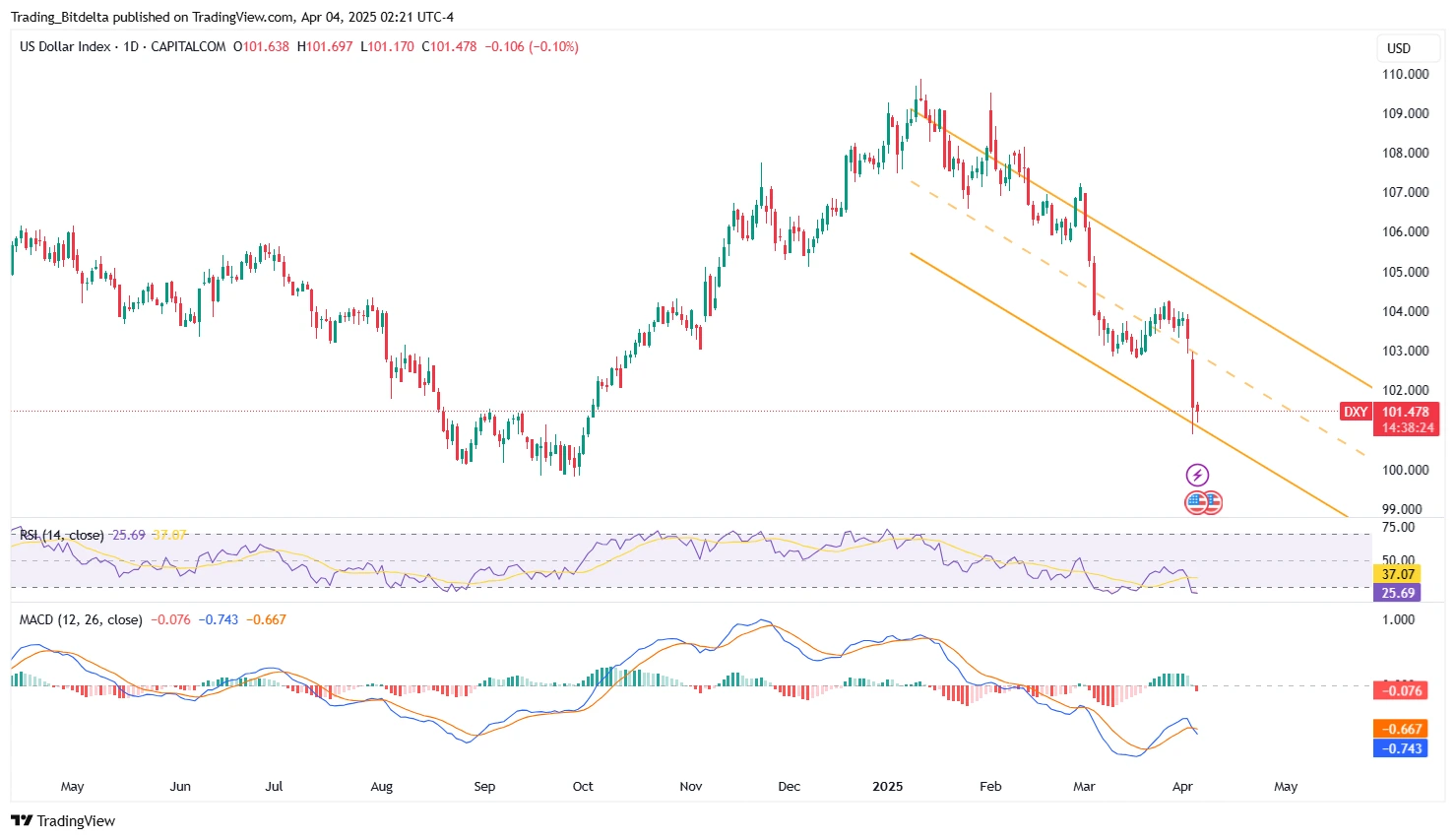
USD Index (DXY) Trend
Source: TradingView | For Illustrative Purposes Only
As these charts suggest, US equities and the dollar may weaken further, while treasuries present a solid opportunity in this volatile environment.
Policy Gamble or Strategic Reset?
The introduction of reciprocal tariffs marks a bold and controversial step in the Trump administration’s economic policy. While the intention to reduce the trade deficit and restore domestic industry is clear, the lack of cost competitiveness, combined with the global reliance on American imports and exports, casts doubt on the long-term success of this strategy. Rising prices, strained trade relations, and increased market volatility are immediate consequences.
Whether this is a necessary disruption for a future reset or a policy misstep with lasting damage remains to be seen. As global markets await further negotiations post-April 9th, all eyes will be on how the US economy—and its trading partners—responds.
Implications of the Fed’s Decision: What Should Investors Expect?
The US Federal Reserve (Fed) announced on March 19 that it will keep interest rates steady at 4.50% (within a 4.25%-4.50% range). While this decision was expected, its implications for investors, traders, and the economy are significant.
Here’s a breakdown of what this means and how markets may react.
Key Takeaways
Interest rates remain unchanged at 4.50%, with two expected cuts later this year.
Inflation remains a concern, especially with new tariff policies potentially driving prices up.
The labour market appears stable, though some indicators suggest uncertainty.
The Fed is easing its Quantitative Tightening (QT) by reducing monthly US Treasury redemptions from $25 billion to $5 billion. This increases liquidity in financial markets.
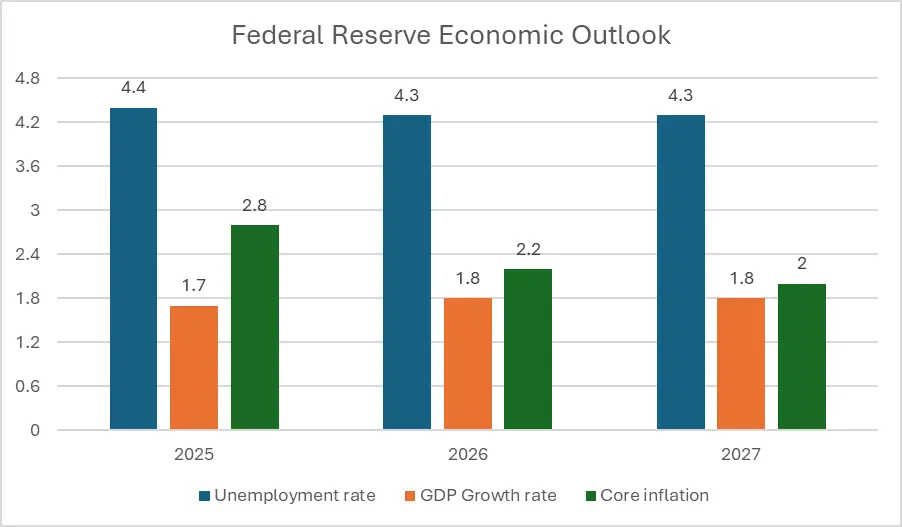
The Fed has cut the forecasted growth rate from 2.1% to 1.7% for 2025.
Fed Economic Outlook – A Summary
Why Did the Fed Keep Rates Steady?
The Federal Open Market Committee (FOMC) is taking a cautious approach. While the economy grows, inflationary pressures and global uncertainties remain key concerns. The Fed aims to balance economic growth and inflation control by maintaining current interest rates.
However, inflation may rise due to tariff policies introduced by the US government. This means the Fed will likely monitor economic data closely before making further decisions.
How Does This Affect Markets?
Public Equities
More liquidity from reduced QT measures is bullish for stocks. Increased capital in the financial system can lead to:
Higher corporate earnings
Stronger investor sentiment
More demand for equities
However, market volatility remains a risk, especially with potential policy changes and global economic shifts.
Bond Market & Interest Rates
With the Fed’s decision to reduce the treasury redemption cap, treasury yields are expected to decline. This will also benefit corporate bonds, as lower yields reduce spreads and increase bond valuations. This is particularly true for investment-grade bonds.
What Should Investors Do Now?
Monitor inflation data: The Fed’s stance may shift based on upcoming economic reports.
Stay updated on Fed policy: Any unexpected shifts can impact markets significantly.
Monitor economic data: The unwinding of QT measures indicates a shift towards a looser monetary policy, as the Fed expects a weaker economy.
For deeper insights and market updates, visit our blog, where you will get expert analysis on the latest trends in global markets. Our experts break down the market into simple digestible bits so that you can trade like a pro.
US Fed Interest Rate Decision: What to Expect on March 19
The Federal Reserve is set to announce its latest interest rate decision on March 19th, with markets widely expecting no changes to the current 4.25%-4.50% target range. Given the current economic landscape, investors and policymakers are weighing inflation concerns against signs of slowing growth.
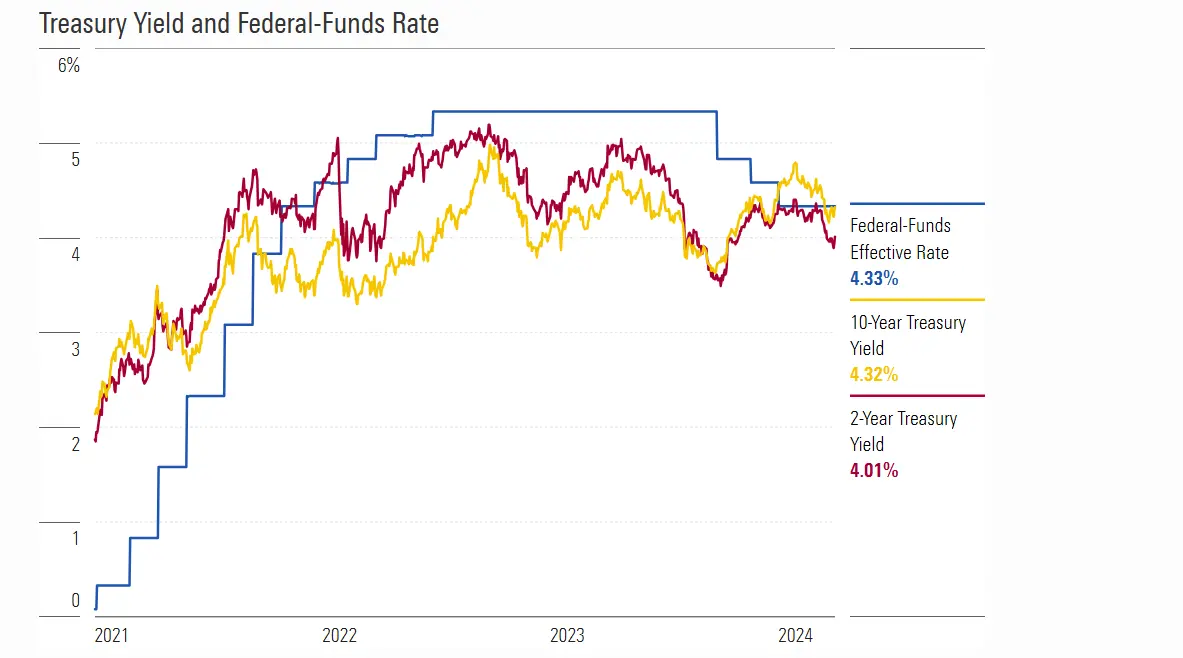
The chart above shows how the Fed’s regime has changed over the past three years.
Balancing Inflation and Recession Risks
Recent economic data presents a mixed picture. Inflation has remained stubbornly high, standing at 3.1% (accounting for food and energy) in February, though the full impact of newly imposed tariffs is yet to be reflected in consumer prices. At the same time, economic growth is showing signs of slowing, with declining consumer confidence, weaker retail sales, and a slight uptick in unemployment (4.1% in February vs. 4.0% in January). Inflation metrics shown below:
Metric
February
January
February Forecast
CPI y/y (without energy and food)
2.8%
2.9%
3.0%
Core PPI m/m
-0.1%
0.3%
0.3%
PPI m/m
0%
0.3%
0.4%
The Federal Reserve faces a critical decision: keep rates steady to maintain inflation control or begin cutting to stimulate economic activity. With the US debt-to-GDP ratio reaching 122.3%, lower interest rates could ease debt servicing costs, but they also risk fuelling further price increases.
What the Market Predicts
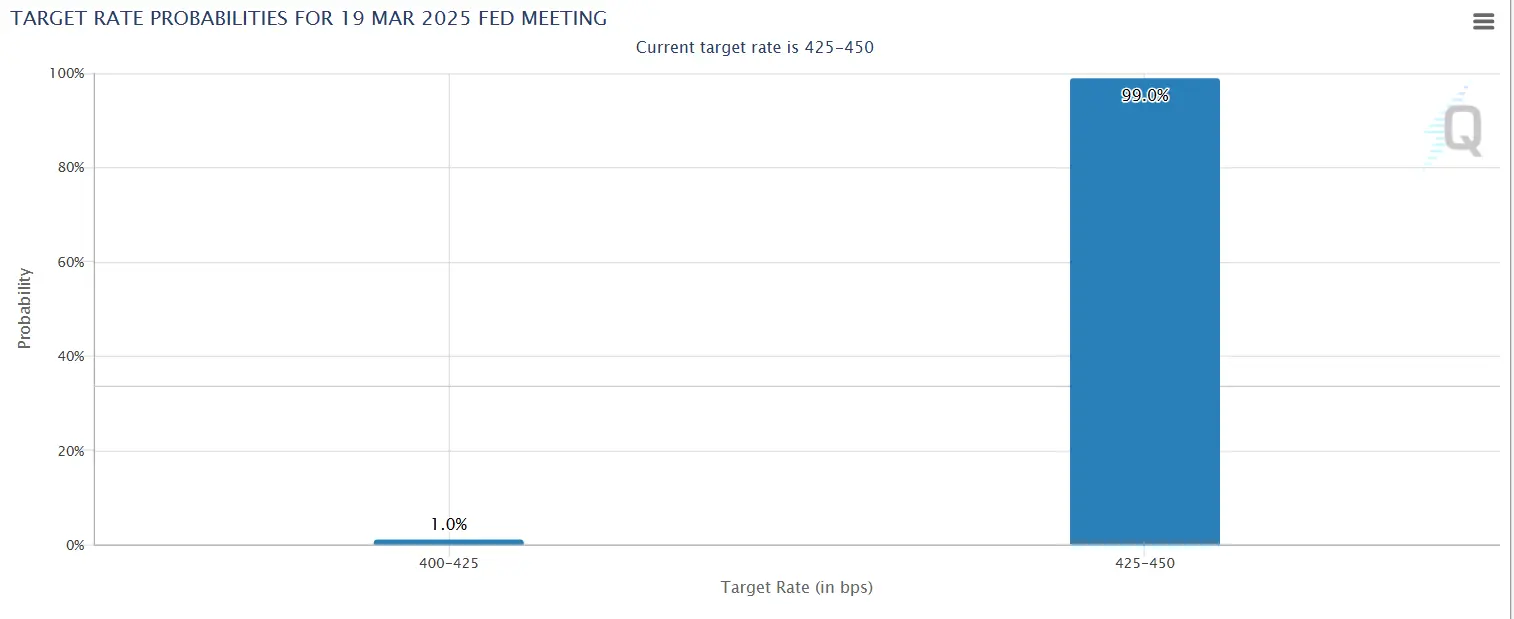
Fed Funds Futures currently indicate a 99% probability that rates will remain unchanged, implying an effective Fed Funds Rate of 4.33%. This suggests that the market does not anticipate a rate cut in the immediate term.
Several factors will play a role in shaping the Fed’s stance:
Treasury Secretary Bessent has advocated for rate cuts to stimulate consumer spending and ease debt burdens.
President Trump has hinted at the possibility of a recession, potentially as a strategy to push for lower rates.
Fed Chair Powell and the FOMC maintain independence in monetary policy, prioritising inflation control over political pressures.
Economic Projections and Meeting Minutes from the Fed will provide insights into future policy direction, particularly regarding inflation expectations and potential fiscal policy changes.
Market Implications
If the Fed holds rates steady, equity markets could continue their bearish trend, as investors anticipate higher borrowing costs. A rate cut, though unlikely, could provide short-term relief but may also exacerbate inflationary pressures.
Final Thoughts
With inflation still a concern and economic uncertainty looming, the Fed is likely to take a cautious “wait-and-see” approach. While rate cuts may be necessary later in the year, the decision on March 19 is expected to maintain the status quo, allowing for further assessment of economic conditions before any major policy shifts occur.
US Tariffs, Illegal Drug Concerns, and Debt Management Behind Trade Policy
The US stock market faced a significant drop on Monday morning following President Donald Trump’s tariff announcement last Saturday. Investors reacted swiftly to the news, triggering a sell-off in equities and a rush towards safe-haven assets.
Equity Market Reaction
Ahead of the opening bell, US futures indicated a sharp downturn:
Dow Jones futures dropped 500 points, reflecting investor caution.
Nasdaq futures dropped by 2.4%, particularly affecting tech stocks.
The market sentiment suggests a defensive shift as investors anticipate potential economic disruptions from the tariff measures. The uncertainty surrounding trade relations and broader macroeconomic concerns have led to heightened volatility.
Surge in Safe-Haven Assets
As equities declined, traditional safe-haven assets witnessed a surge in demand:
Gold prices experienced a significant gap-up at market opening, benefiting from increased risk aversion and concerns over economic stability.
Silver followed a similar pattern, reflecting its status as an alternative store of value.
The US dollar appreciated by over 1%, driven by investor demand for safety following new policy announcements. The dollar’s strength underscores confidence in the US currency amid global trade tensions.
The Tariff Announcement: Scope and Rationale
President Trump’s latest tariff decision targets their key trading partners and is set to take effect on February 4, 2025. The breakdown of these tariffs is as follows:
Canada and Mexico will face a 25% tariff on all goods entering the US. The stated rationale is to address border security concerns and combat the flow of illegal drugs like fentanyl. However, for Canada, the tariff on energy products is limited to 10%, as the US significantly relies on Canadian energy imports.
China will see a 10% tariff on imports, a continuation of ongoing trade tensions. However, the lower rate compared to North American partners reflects strategic considerations. Trump has previously indicated a roadmap to increase tariffs on China to 60%, aligning with his broader trade policy objectives.
Panama has not yet been targeted with new tariffs. President Trump has refrained from imposing tariffs on Panama because the country has shown willingness to negotiate on various issues related to trade and the management of the Panama Canal. This diplomatic approach indicates an interest in resolving disputes through negotiation rather than immediate economic sanctions.
Global Reactions
Canada’s Response
Retaliatory Tariffs: Canada swiftly responded by imposing a 25% tariff on $155 billion of US goods. Prime Minister Justin Trudeau emphasised that these measures would have tangible consequences for American consumers.
Diplomatic Engagement: Despite the strong response, Trudeau described a “good” phone call with Trump, suggesting ongoing diplomatic efforts to ease tensions.
Mexico’s Position
Countermeasures: Mexico announced plans to impose retaliatory tariffs but must specify the details.
Economic Concerns: President Claudia Sheinbaum emphasised the importance of maintaining cooperation but warned of potential economic consequences, including a GDP contraction and a weakening peso should the tariffs persist.
China’s Strategy
Legal Challenge: China intends to challenge the tariffs at the World Trade Organisation (WTO), arguing that they violate international trade rules.
Currency Devaluation Speculation: Analysts speculate that China may opt for currency devaluation to offset the impact of tariffs, a move that could further strain US-China relations.
The Real Underlying Issue: Debt Management?
While the tariffs are officially justified on border security and drug trafficking concerns, deeper financial motivations may be at play.
Scott Bessent, US Treasury Secretary under Trump, has made several statements regarding the country’s debt management strategy:
The US national debt has surpassed $36 trillion, raising concerns over long-term fiscal sustainability.
Proposed Debt Management Plan:
Reducing government spending.
Cutting corporate and individual taxes over the next decade, projected to cost the US $4.6 trillion in lost revenue.
Offsetting this loss by increasing tariff revenue from Canada, Mexico, and China, projected to generate $2.5–3 trillion over 10 years.
Even with these measures, an estimated $2 trillion debt gap would remain, raising the possibility of future tariff expansions—potentially targeting Eurozone countries.
Market Implications and Outlook
The immediate market reaction underscores the economic uncertainty surrounding these trade policies:
Equities: Increased volatility is expected as investors reassess the risks tied to global trade disruptions. More market volatility may be experienced during the US market open today.
Safe-Haven Demand: Gold and the US Dollar will likely remain in favour amid heightened geopolitical and economic concerns.
Inflationary Pressures: Tariffs typically lead to higher consumer prices, which could complicate the Federal Reserve’s monetary policy decisions.
US FOMC 29th Meeting Highlights: Fed Holds Interest Rates Steady
On January 29, 2025, the Federal Reserve decided to keep the federal funds target rate (FFTR) unchanged at 4.25%–4.5%. This decision marks a cautious approach as the central bank monitors economic data and policy changes. Fed Chair Jerome Powell addressed the decision in a press conference, offering insight into the Fed’s outlook for the economy, inflation, and labour market.
Economic Growth and Progress
The US economy has made significant growth towards the fed’s goals. GDP growth exceeds 2%, and inflation is nearing the target but is still elevated (PCE rose 2.6% in 2024 and Core PCE increased 2.8%). Powell expects the progress on inflation to continue, and the Fed remains watchful.
Regarding the Labor Market, Powell said it’s no longer a source of inflationary pressure.
The Crypto Markets
Jerome Powell stated that they support cryptocurrencies, and banks can engage with crypto firms if they manage risks effectively. While the threshold for crypto activities is higher due to the industry’s newness, Powell clarified that the Fed does not intend to “debank” legitimate businesses.
He emphasised that banks must carefully assess risks when working with crypto clients, reiterating the Fed’s openness to financial innovation. Powell also stressed the need for a clear regulatory framework to address crypto-related challenges.
Following his remarks, Bitcoin rebounded by 3.3%, signalling a positive market response.
Fed’s Approach Moving Forward
The Fed is in no rush to change policy, and the future decisions will be based on upcoming data. However, uncertainty remains elevated due to significant policy shifts, including potential economic impacts from President Trump’s administration.
Powell stated that the Federal Reserve may consider cutting rates if inflation data shows signs of cooling and that the spotlight moving forward will be on CPI and PCE data. However, this outcome remains uncertain due to potential economic shifts under President Trump’s new administration and the impact of his tax tariffs.
Powell avoided commenting on potential tariff policies, emphasising that the Fed does not speculate on political decisions.
Market Reaction
Stocks and crypto markets reacted with slight gains, as investors viewed the decision as a sign of economic stability.
The Fed’s cautious stance suggests no immediate rate cuts, meaning borrowing costs will remain steady for businesses and consumers.
The AI Battle Heats: DeepSeek from China Takes on America
The US stock market took a surprising downturn this Monday, with one of the key reasons, aside from expectations that the Fed will not cut interest rates this Wednesday, being the unexpected rise of Deepseek. This development has sent shockwaves through the US market today, particularly impacting major indices like the S&P 500 and Nasdaq.
DeepSeek’s Cost-Effective GPT-4 Alternative
The AI industry experienced a shocking moment with the launch of Deepseek’s latest model last Friday. This Chinese AI company has stunned the industry by proving that cutting-edge AI development can be achieved at a fraction of the traditional cost. Their model, which matches GPT-4’s capabilities in coding, problem-solving, and multilingual communication, was developed for just $6.7 million—a dramatic contrast to OpenAI’s reported billions in total investment. The implications for the AI landscape are nothing short of astounding.
Who is DeepSeek Anyway?
DeepSeek, originally linked to High-Flyer Capital Management, a Chinese quantitative hedge fund, brings a non-traditional perspective to AI development. This background in finance, particularly in quantitative trading, has endowed DeepSeek with a unique approach to resource management. By leveraging the computational infrastructure initially built for trading, DeepSeek has developed AI models focusing on cost efficiency, disrupting the conventional high-cost model of AI development prevalent in the industry.
The company offers their R1 model as an open-source solution, which contrasts with OpenAI’s subscription-based model that charges enterprises $200 per month. Additionally, ChatGPT Plus, which costs $20 per month, is now being offered for free (it has just been re-offered), although its performance is lower than that of ChatGPT Pro (the O1 model).
AI Development Cost Comparison
The cost differences among major AI developments are significant:
OpenAI: Founded 10 years ago, OpenAI has 4,500 employees and invests at least $5 billion annually in the development of AI models.
DeepSeek: Established 2 years ago, DeepSeek employs only 200 people and has spent approximately $6.7 million on development.
Google/Gemini: The company has invested around $500 million in its Gemini Ultra project.
Anthropic (Claude): Their reported expenditure is between $50 million and $100 million.
Why is DeepSeek’s Cost So Low?
The next question is: How does DeepSeek keep its costs so low? The answer lies in their innovative approach. Rather than following the traditional AI development methods, DeepSeek has adopted a technique known as MoE (Mixture of Experts). When a question is posed to DeepSeek, it first determines which expert model is best suited to provide the optimal answer. For example, if a financial question is asked, the model activates its financial expert and deactivates the other expert models.
This approach allows DeepSeek to reduce costs significantly by only activating the relevant model for each specific query, rather than running multiple models simultaneously. Interestingly, Deeps EEK’s latest version relies on AMD graphics processing units (GPUs) rather than the industry-standard NVIDIA chips. This shift in hardware could raise the question: Can AI models be developed effectively using hardware from companies other than NVIDIA?
DeepSeek’s AI capabilities currently cover a wide range of tasks, from simple mathematics to calculus, showcasing its strong logical reasoning abilities. In addition to minimising development costs, DeepSeek has further disrupted the US AI market by offering its model at a fraction of the price—hundreds of times cheaper.
Rather than developing the model exclusively in-house, DeepSeek has chosen to make it open-source, inviting developers worldwide to build upon and extend the technology. This approach has helped DeepSeek save enormous costs, allowing other developers to contribute to the model’s development, unlike American companies that bear the entire development cost internally. With significantly lower development costs, DeepSeek can afford to offer its model at a much lower price point.
Strategic Timing and Market Impact
DeepSeek’s launch timing seems strategically poised to challenge the US AI strategy. Just days after Trump announced a $500 million AI investment plan, aimed to make America the global AI leader, DeepSeek revealed its groundbreaking model. This raises questions: Was it a deliberate move to counter US ambitions, or simply a coincidence, aligning with traditional Chinese business practices before the Chinese New Year? While it could be seen as a bold response to the US AI claims, the true strategic intent behind the timing remains unclear. However, what’s undeniable is its significant impact on the market.
Hardware Market Implications
NVIDIA’s market position is under new scrutiny as DeepSeek showcases effective AI development using alternative hardware solutions. By utilising Huawei chips and AMD GPUs instead of relying solely on high-end NVIDIA GPUs, DeepSeek’s approach raises questions about the future hardware requirements for AI development. On top of that, NVIDIA recently released a supercomputer designed for public use, which is unusual for the company, as they have typically not focused on supercomputers. This move could suggest that NVIDIA is aware of emerging trends in AI hardware, possibly in response to developments like DeepSeek’s, signalling a shift in the competitive landscape.
Market Response
Current market dynamics show increasing uncertainty around traditional AI valuations. OpenAI’s $86 billion valuation faces new scrutiny as DeepSeek demonstrates similar capabilities at minimal cost. NVIDIA’s stock performance reflects growing investor concern about long-term hardware demand. Furthermore, Sam Altman has quickly announced various roadmaps in response to the buzz surrounding DeepSeek’s efficiency, aiming to reassure investors and the market of OpenAI’s continued innovation and leadership. Similarly, Mark Zuckerberg has made announcements regarding the next steps for Meta AI, emphasising Meta’s commitment to advancing AI technology and maintaining its competitive edge in the market. These rapid responses from industry leaders highlight the pressure to adapt and innovate amidst new competitive challenges.
Forward-Looking Indicators
Critical areas for market monitoring:
NVIDIA’s data centre segment performance
AI startup valuation trends
Industry adoption of efficient development methods
Strategic responses from major tech companies
Future Market Outlook
DeepSeek’s cost-efficient AI development represents a notable paradigm shift, suggesting that innovation in AI may no longer be tied to excessive capital deployment. This development could lead to broader market changes, including altered investment strategies, revised corporate approaches to AI spending, and heightened scrutiny of existing valuations. For market participants, the key questions will centre on whether DeepSeek’s model sets a new standard for the industry and how established players adapt to this potential disruption.
Technical Analysis
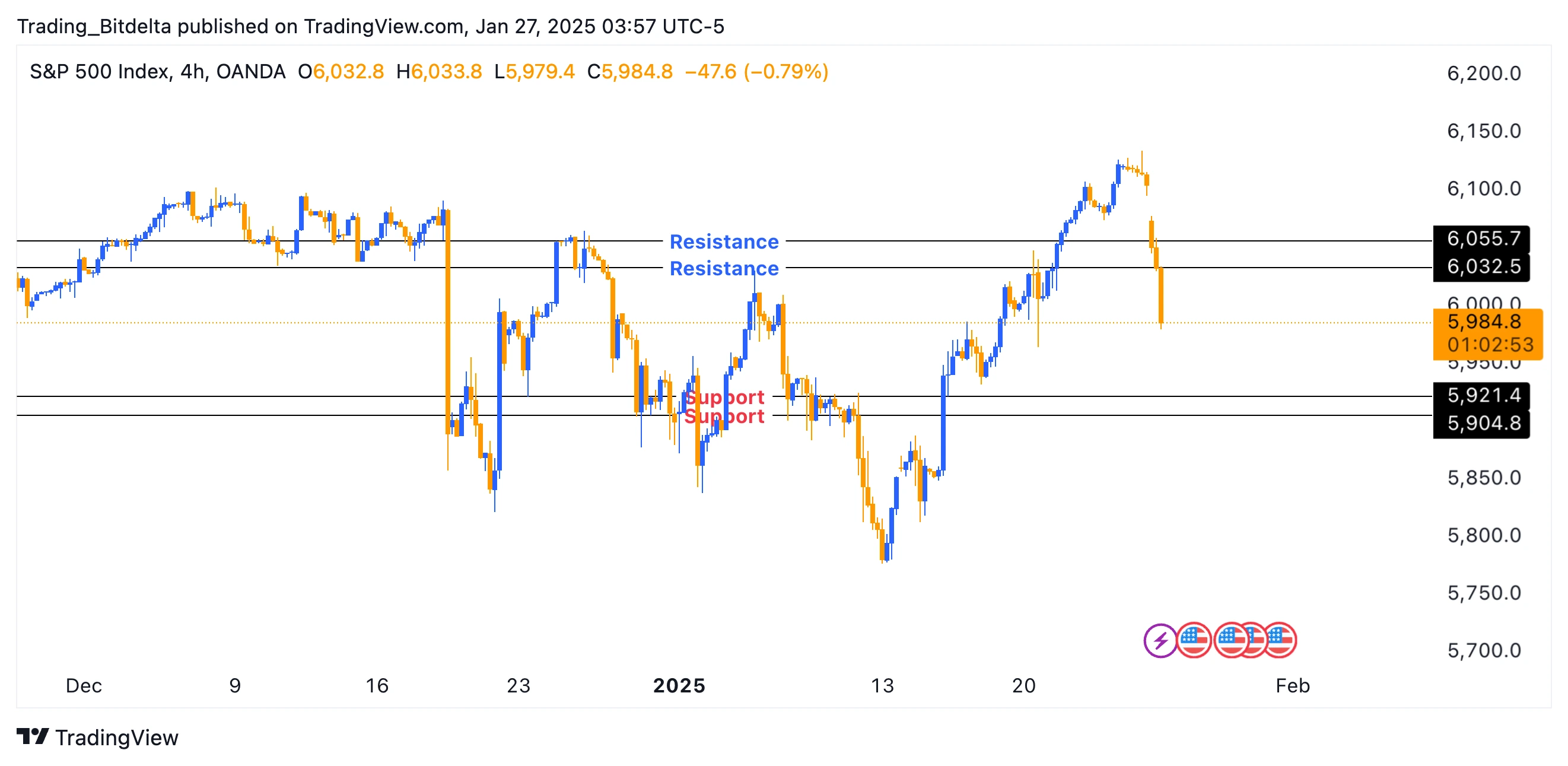
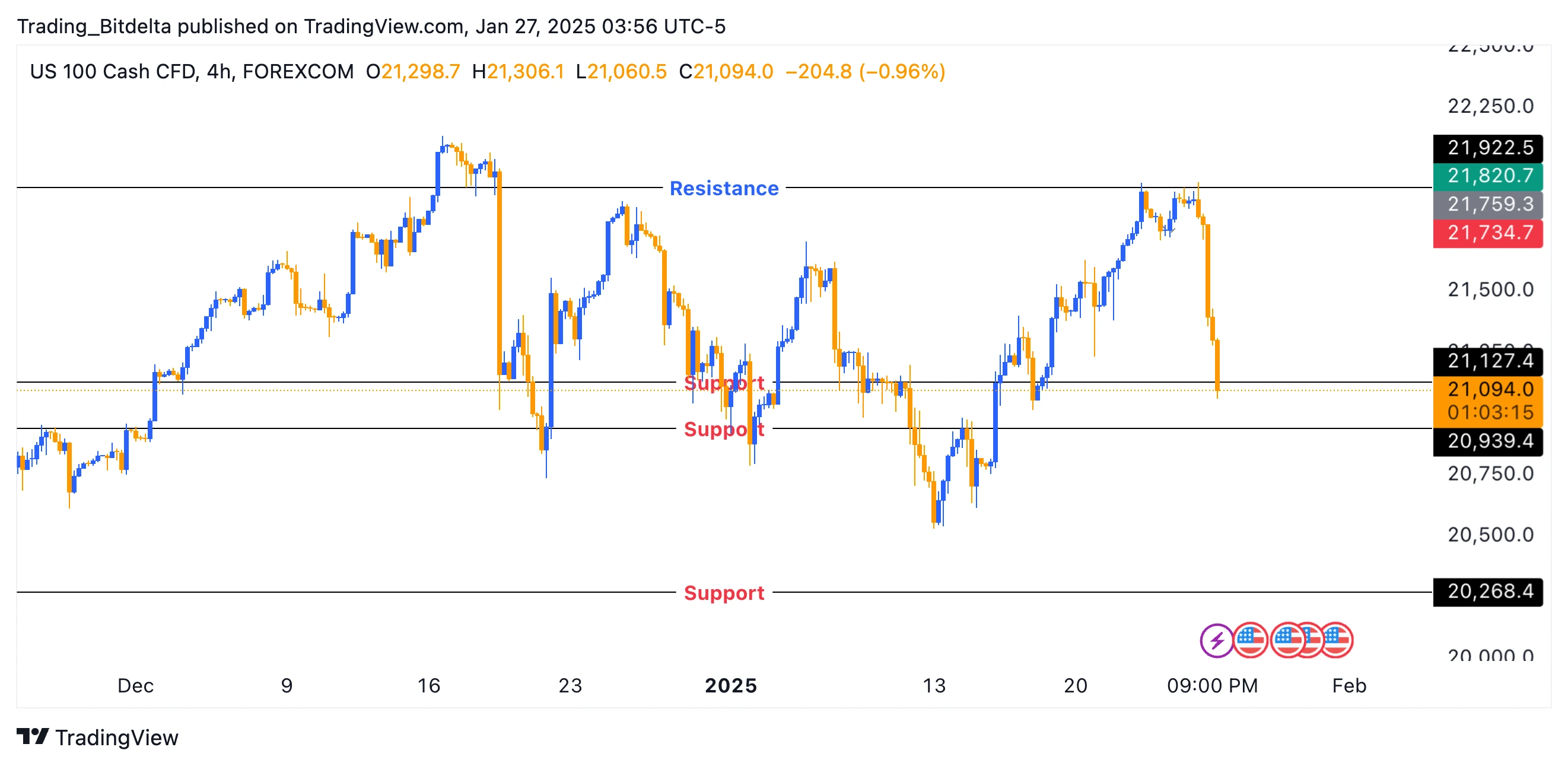
Following the market reaction to DeepSeek’s disruptive AI launch, major US indices like the S&P 500 and NASDAQ 100 futures face heightened volatility. This Monday’s market open observed a sharp decline, partly influenced by expectations surrounding the Fed’s interest rate decisions and DeepSeek’s sudden rise as a significant challenger in the AI sector.
S&P 500
Image Source: TradingView | For Illustrative Purposes Only
NASDAQ 100
Image Source: TradingView | For Illustrative Purposes Only
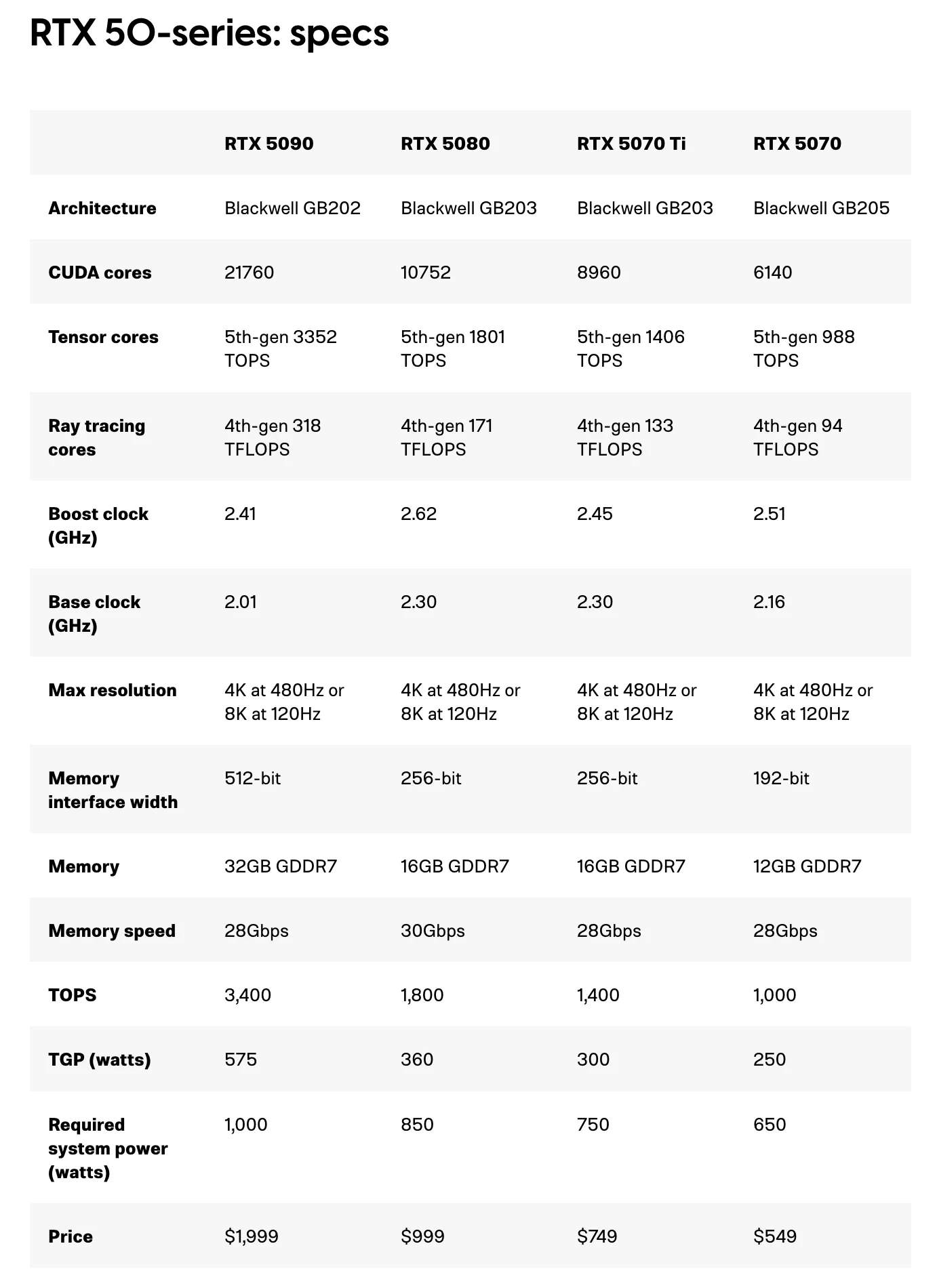
At CES 2025, NVIDIA revealed its highly anticipated RTX 50 series, marking a new era of graphics performance and AI-driven computing. The flagship model, the RTX 5090, is drawing significant attention for its impressive features, including a massive number of 92 billion transistors, and it claims to be the largest single-chip ever produced. However, despite these technological achievements, the market response has been more reserved than expected, raising questions about whether the high price points and cutting-edge features will resonate with consumers.
The New Lineup
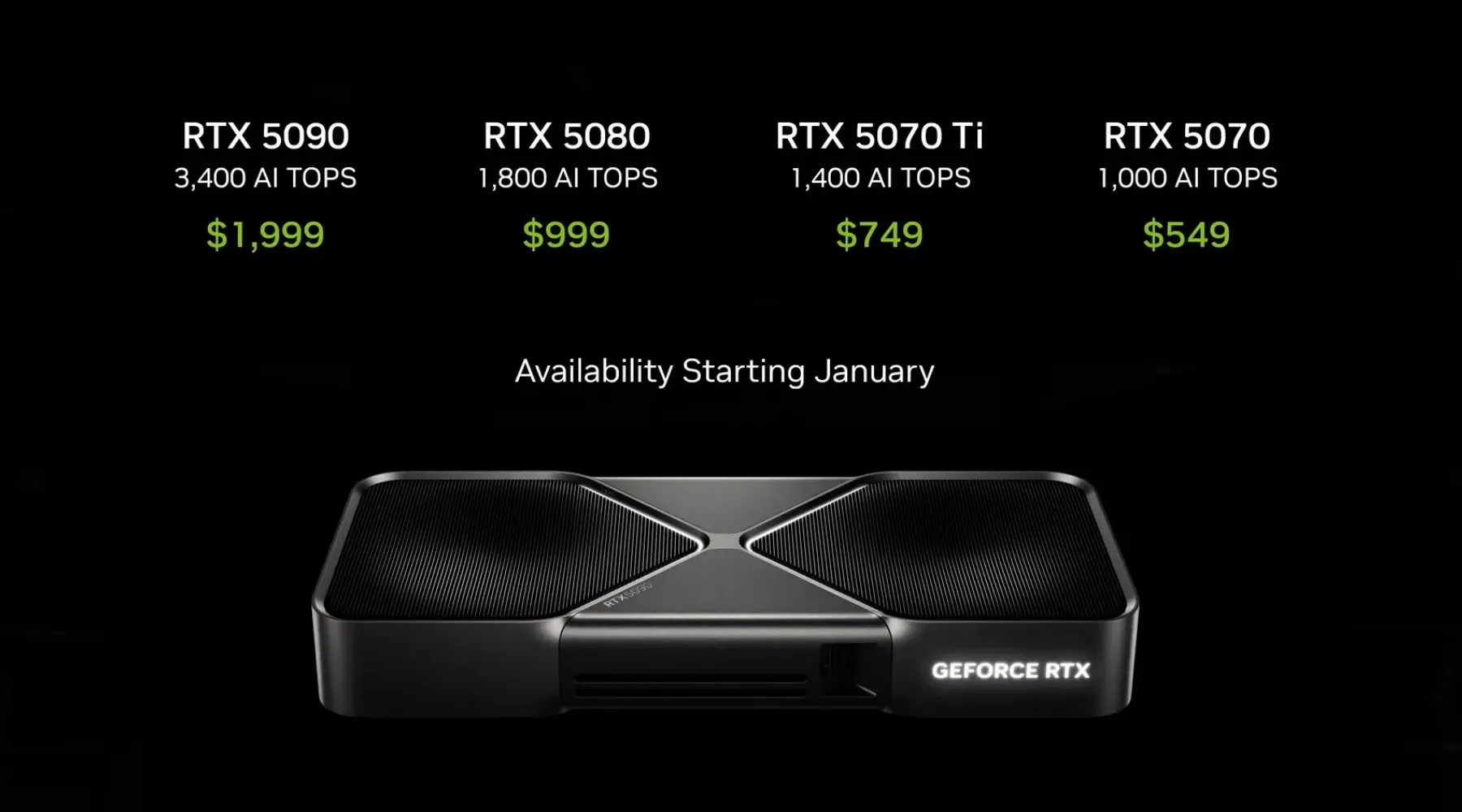
The new RTX 50 series offers four key models, each designed to meet different performance needs at various price points:
RTX 5090: $1,999
RTX 5080: $999
RTX 5070 Ti: $749
RTX 5070: $549
Source: DigitalsTrend
The RTX 5090 is the top model in NVIDIA’s latest graphics card lineup, offering remarkable performance. It can handle an astounding 3,352 trillion AI operations per second, which is twice as fast as the RTX 4090. This significant performance boost comes from NVIDIA’s new Blackwell architecture, which integrates advanced technologies like DLSS 4 (Deep Learning Super Sampling). In simple terms, DLSS 4 helps improve graphics quality by generating additional frames, making games and applications run smoother and look better. NVIDIA claims that DLSS 4 could provide up to eight times the performance of traditional rendering methods.
For gamers, the RTX 50 series brings an important feature called NVIDIA Reflex 2 with Frame Warp, which reduces input lag by up to 75%. This improvement is crucial in competitive gaming, where every millisecond matters. For content creators, RTX Neural Faces enhances the realism of 3D-rendered characters, especially hair and skin, making them appear more lifelike.
Additionally, the RTX Mega Geometry technology facilitates scenes with 100 times more detailed 3D objects than earlier generations, significantly improving visual quality.
One of the most exciting advancements in the RTX 5090 is its ability to handle complex AI tasks directly on the graphics card. This is referred to as FP4 precision, which essentially allows AI-driven processes—such as creating images or processing large datasets—to be done faster and without relying on cloud servers, benefitting developers and creators working in fields like AI-generated art or deep learning. By increasing the efficiency of AI tasks, the RTX 5090 sets a new benchmark for consumer-level AI processing.
Project DIGITS: Nvidia’s Personal AI Supercomputer
In a surprising move, NVIDIA also unveiled Project DIGITS—a personal AI supercomputer designed for developers who require high processing power without relying on cloud-based solutions. What’s truly remarkable about Project DIGITS is its compact size—small enough to fit on a desk yet powerful enough to handle large AI models. Featuring the Grace Blackwell Superchip, 128GB of memory, and up to 4TB of storage, the system promises seamless processing of large-scale AI workloads.
Priced at around $3,000, Project DIGITS is not inexpensive, but for developers working with AI, its ability to provide powerful processing on demand could be invaluable. However, some investors view DIGITS as a niche product, catering to a limited market. While the AI supercomputer could enhance NVIDIA’s reputation in the AI space, it may not generate significant revenue in the short term, making it a risky investment from a financial standpoint.
Despite the groundbreaking nature of the RTX 50 series and Project DIGITS, NVIDIA’s stock has faced a downturn, leaving investors questioning the company’s trajectory.
Blackwell Architecture’s Real-World Impact: While the architecture of Blackwell is a significant milestone, investors are cautious about how it will perform in real-world applications. Scepticism also exists about how the new GPUs will perform across various market segments and whether their high price points can be justified for everyday consumers.
Strategic Shift to AI Supercomputers: As demonstrated by Project DIGITS, NVIDIA’s decision to diversify into AI supercomputers has raised eyebrows. While AI is undoubtedly the future, investors are uncertain, especially considering the potential risks in allocating resources away from traditional GPU production.
Dependence on AI Performance: The RTX 5090’s impressive AI capabilities—like DLSS 4 and FP4 precision—rely heavily on AI-driven features. However, some investors worry that these AI advancements may not be widely adopted across all software applications. If the GPU’s AI features aren’t fully utilized by all users, its performance may not live up to the hype.
Economic and Industry Risks: Broader concerns about the semiconductor industry, including chip restrictions and regulatory challenges, have also contributed to the stock’s recent decline. Economic uncertainty and potential regulatory hurdles in AI development present additional risks for NVIDIA.
The Road Ahead: Can NVIDIA’s Bold Vision Succeed?
The RTX 50 series undeniably sets a new benchmark for graphics and AI performance. However, the market response suggests that NVIDIA faces challenges in convincing consumers and investors of the value these products will provide. NVIDIA’s success will depend not just on the technological prowess of the RTX 5090 and Project DIGITS but also on how effectively the company can balance innovation with real-world applications and affordability.
The RTX 50 series desktop versions are scheduled for release on January 30, with the mobile versions following in March 2025. As the rollout progresses, the tech world will closely monitor whether NVIDIA’s bold advancements translate into widespread adoption. Ultimately, the company’s future might hinge on whether its groundbreaking AI and graphics technology can meet the practical demands of consumers and businesses alike.
Technical Analysis
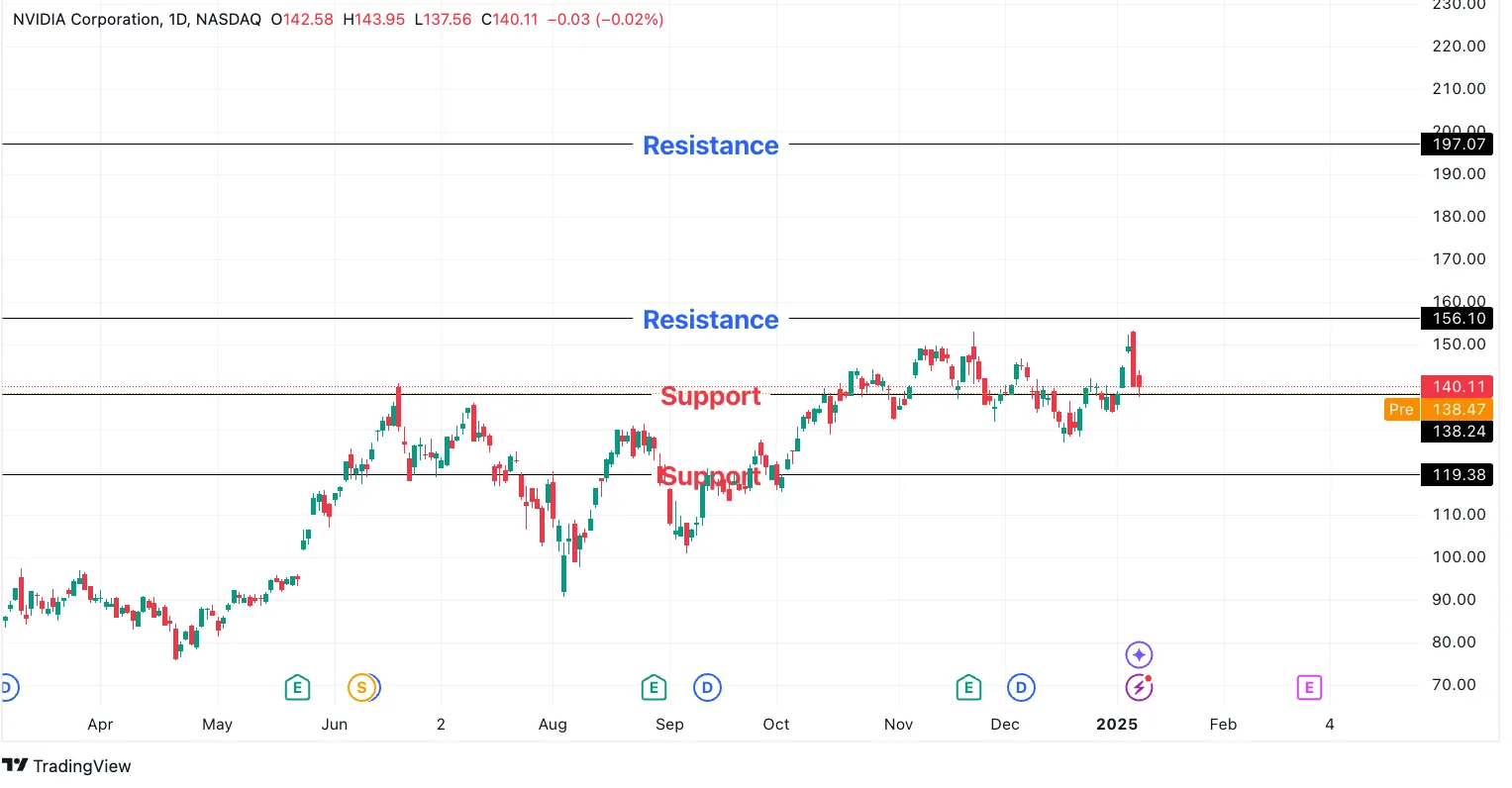
NVIDIA’s stock has experienced fluctuations following the CES 2025 announcements. The early market reaction appears cautious, despite the technological advancements presented. However, despite these challenges, NVIDIA has a solid foundation, with its advanced technology, clear vision, and strong partnerships, to sustain its position and achieve long-term growth in the AI era.
Image Source: TradingView | For Illustrative Purposes Only
S1: $138.24
R1: $156.10
S2: $119.38
R2: $197.07
Fed Pauses Rate Cuts, Awaits Clearer Inflation Data
The Federal Reserve has reinforced its cautious stance on monetary policy, indicating that further interest rate cuts will be postponed until there is more definitive evidence of inflation trends. Following the December meeting, the Fed implemented its third consecutive 0.25% rate reduction, lowering the benchmark rate percentage to a range of 4.25 to 4.5. However, the decision was characterised as a “close call”, with some officials favouring maintaining the current rates.
The minutes from the FOMC meeting released yesterday provided further insights into the Fed’s thinking. Policymakers emphasised the need for a careful and data-driven approach, with several participants highlighting the importance of “prudent monetary policy” in the coming quarters. Elevated inflation figures, strong consumer spending, and reduced downside risks to the labour market and economic activity were cited as key factors influencing their decision.
Since September, the Fed has cut interest rates by a cumulative 1%, but the pace of future cuts is expected to slow. The median projection for rate cuts in 2025 has been revised to two, compared to the four cuts anticipated in September. This adjustment reflects growing concerns about upside risks to inflation and the need to maintain economic stability.
Fed Chair Jerome Powell emphasised that future rate decisions depend heavily on incoming economic data. The Fed has also incorporated temporary assumptions about tariffs and immigration policies under the Trump administration into its economic forecasts, projecting slightly higher inflation in 2025.
Market Reactions and Economic Outlook
Following the release of the FOMC minutes, US stock markets showed mixed reactions. The Nasdaq-100 dipped by 0.07%, reflecting ongoing concerns about economic challenges and a slower-than-expected disinflation process. Economic slowdowns or uncertainty can particularly impact technology stocks in the Nasdaq, as these companies tend to be more sensitive to changes in market conditions.
Meanwhile, the S&P 500 rose by 0.16%, marking its fifth positive close of the year, as investors welcomed signs that inflationary pressures might be stabilising. The Dow Jones also saw a modest gain of 0.25%, supported by the steady performance of blue-chip stocks.
The Fed’s cautious stance will likely contribute to increased market volatility in the near term. Rising bond yields without corresponding positive economic data could weigh on equity markets. Bond yield trends will be a critical factor to watch, as they have the potential to significantly influence market dynamics.
Economic Data and Global Tensions
Critical economic data, such as US employment figures and inflation reports, will be pivotal in shaping market sentiment. These indicators will clarify the global economic outlook amid ongoing uncertainties about the Fed policy and escalating US-China tech tensions. Recent US restrictions on AI chip exports to China have added to market caution, with potential ripple effects being closely monitored.
Opportunities Amid Caution
The market has largely priced in the Fed’s slower pace of rate cuts, as well as concerns about potential tariff-induced inflation under the Trump administration. While bond yields may have limited room to rise further, the current market pullback could present a buying opportunity, particularly in US bonds and large-cap stocks. The US economy remains robust, supporting a favourable investment environment.
Technical Analysis
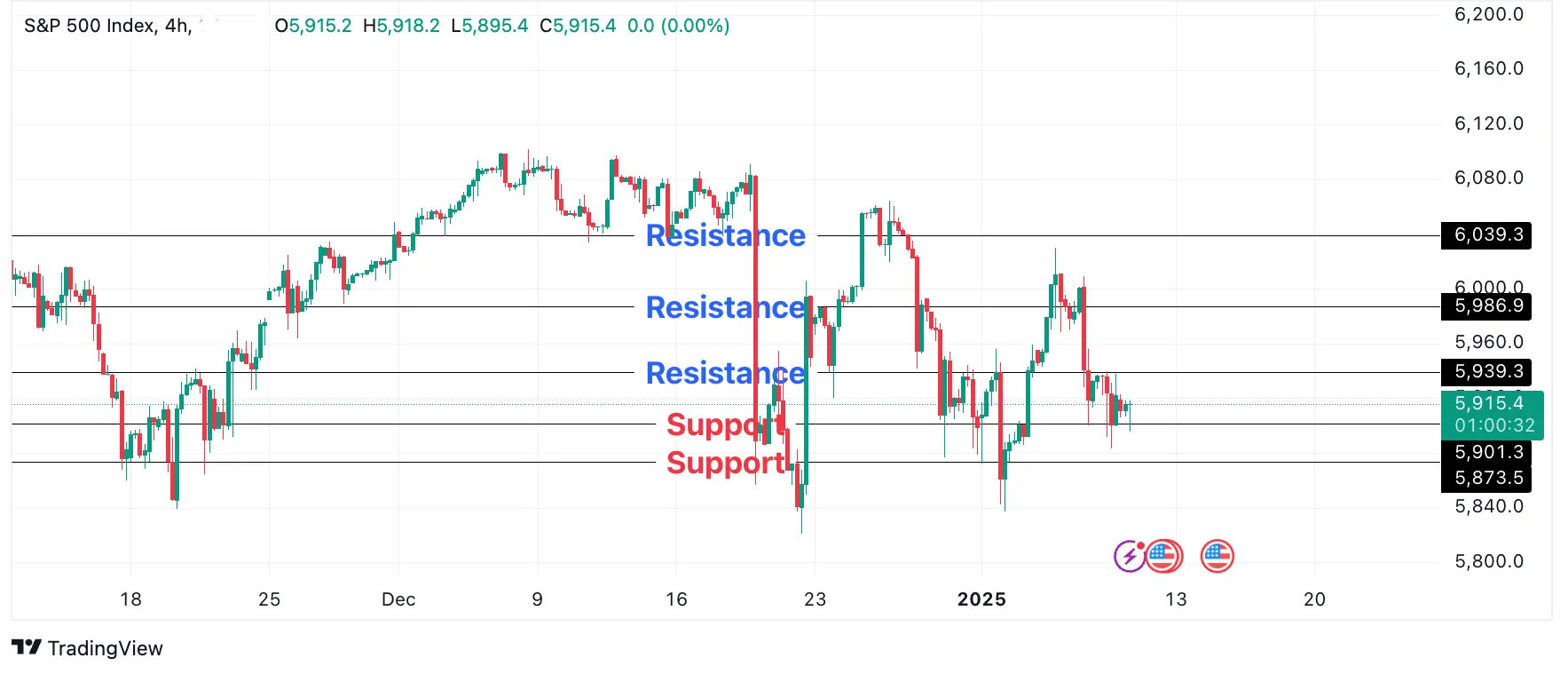
S&P 500
Image Source: TradingView | For Illustrative Purposes Only
S1: $5,901
R1: $5,940
S2: $5,873
R2: $5,986
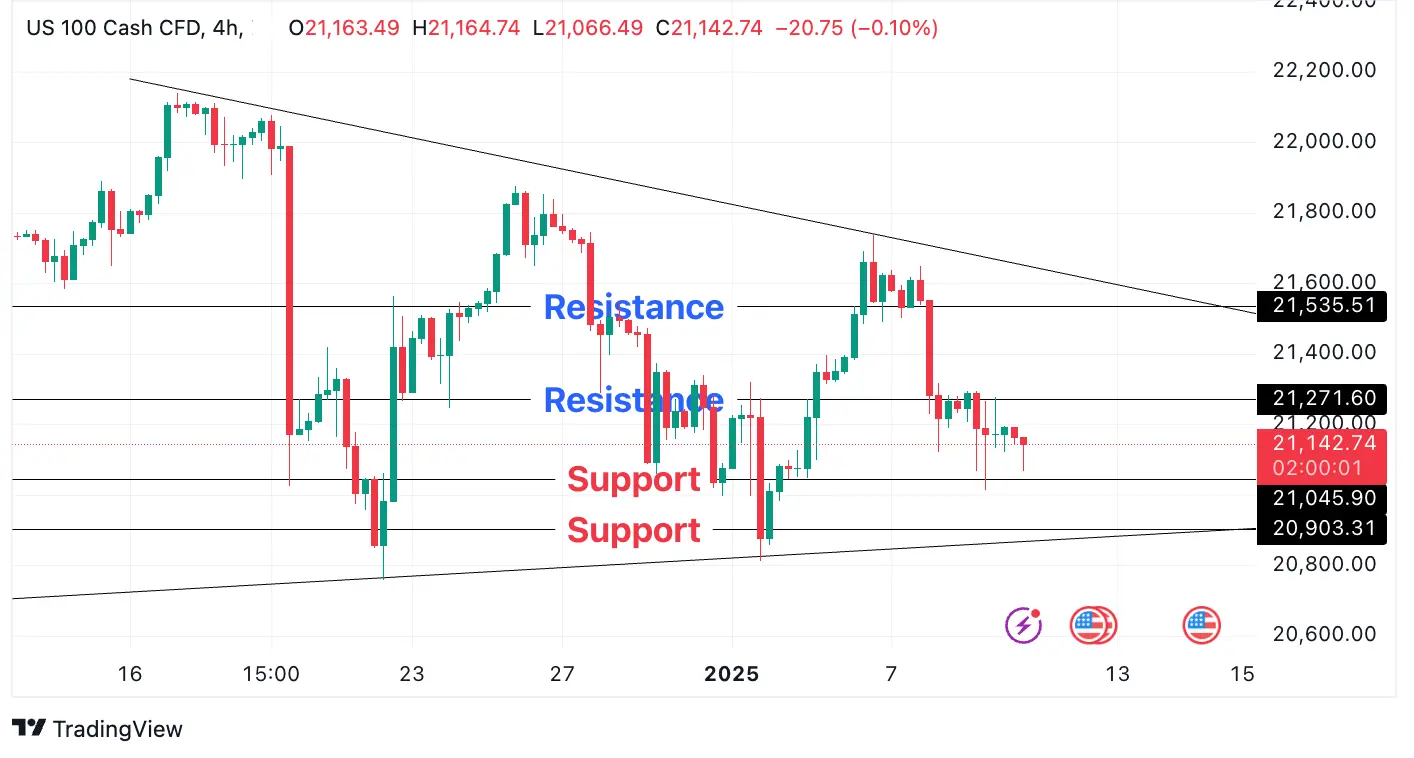
NASDAQ-100
Image Source: TradingView | For Illustrative Purposes Only
S1: $21,045
R1: $21,271
S2: $20,903
R2: $21,535
Gold Price Overlook for 2025: Projections, Trends, and Key Drivers
Major financial institutions are projecting gold prices to maintain strong levels in 2025, with most estimates ranging between $2,800 and $3,000 per ounce.
Goldman Sachs: Most optimistic view with $3,000-$3,150 per ounce, based on increased central bank purchases, especially as China resumes buying, potential US interest rate cuts, and ongoing geopolitical tensions.
Bank of America and Citigroup: Both project $3,000 per ounce, driven by strong central bank demand, anticipated Fed rate cuts, and favourable macroeconomic factors.
Wells Fargo: Predicts $2,800-$2,900, based on emerging market central bank demand and continued safe-haven appeal.
World Gold Council: Projects an average of $2,750 per ounce, emphasising persistent high inflation rates and increased safe-haven demand.
JPMorgan Chase: Conservative outlook at $2,600-$2,850, citing US economic slowdown and persistent high inflation.
Fitch Ratings: Mostly conservative projections, anticipating a decline to $2,000 per ounce in 2025 and potentially $1,800 in 2026, due to an expected decrease in demand and investor profit-taking.
Interest Rates and Gold Prices
Gold prices typically move inversely to interest rates. When interest rates rise, gold loses appeal as investors shift towards higher-yielding assets like bonds. In contrast, lower interest rates make gold more attractive. In 2024, gold prices have steadily increased amid expectations that the US Federal Reserve will begin cutting rates.
Global Economic Conditions
Economic conditions worldwide significantly influence gold prices. During periods of economic slowdown or recession, investors often turn to gold as a safe-haven asset, pushing its price higher. For instance, gold prices surged during the 2007-2008 Subprime Mortgage Crisis.
Central Bank Activity and Global Demand
A significant factor supporting gold prices is the increased purchasing activity from central banks, particularly in emerging markets. China and Russia have notably expanded their gold reserves in 2024, a trend expected to continue into 2025. Consumer demand, especially from major markets like India and China, also plays a crucial role in determining price movements. Additionally, the ongoing Chinese real estate crisis has prompted many Chinese investors to turn to gold as a safer store of value, further driving up demand. The sustained high inflation rates globally reinforce gold’s traditional role as an inflation hedge.
Geopolitical Factors
Geopolitical tensions, not just between Russia and Ukraine but also in the Middle East, as well as ongoing trade disputes between the United States and China and various international conflicts, continue to influence gold prices. These uncertainties typically drive investors towards safe-haven assets. The primary reason behind gold’s all-time high (ATH) this year can be attributed to these geopolitical factors, which have heightened market uncertainty and increased demand for gold as a secure investment. However, potential short-term volatility remains a risk. Profit-taking by investors and possible slowdowns in central bank purchases could impact prices.
Long-Term Perspective
Despite potential short-term fluctuations, the fundamental factors supporting gold prices appear robust. The combination of persistent inflation concerns, geopolitical uncertainties, and central bank demand suggests a continued upward trend in the longer term.
Technical Analysis
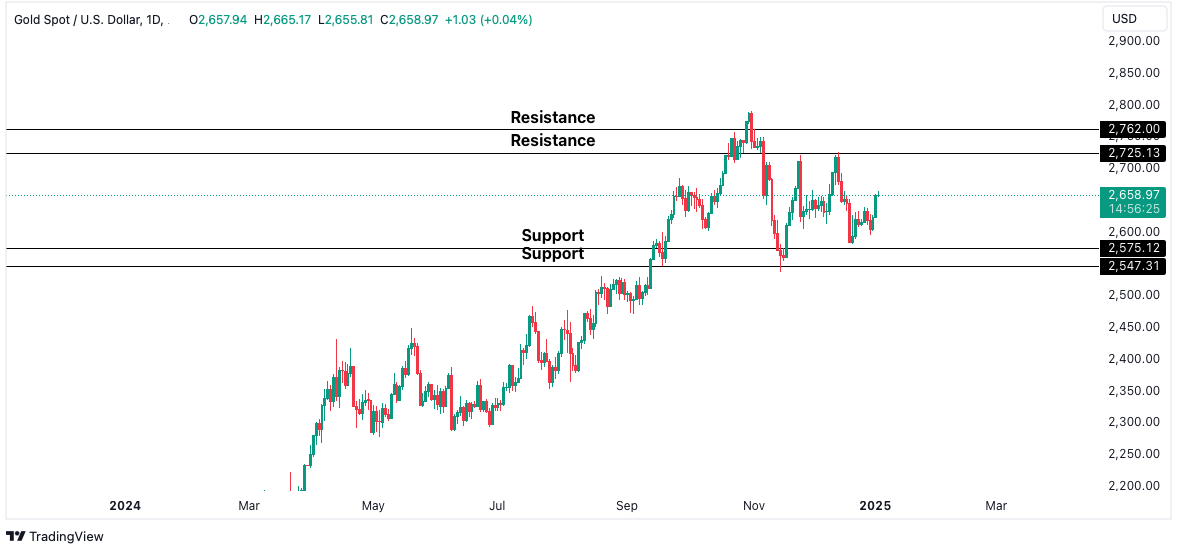
In addition to macroeconomic and geopolitical factors, short-term price movements often respond to technical signals. From a macro perspective, geopolitical factors are the primary drivers behind gold’s upward movement. Currently, gold prices are experiencing a pullback as the market waits to see if Trump can help de-escalate the conflict. However, Putin’s recent statement rejecting Trump’s proposal to delay Ukraine’s NATO membership for the next 20 years has added further uncertainty to the market. If the conflict persists, gold prices may continue to rise.
Image Source: TradingView | For Illustrative Purposes Only
From a chart perspective, key support levels are between $2,547 and $2,575. If these levels hold, gold prices may continue to rise.
Central Bank Policies Update: Key Decisions Impacting Global Markets
As we enter the quieter Christmas holiday week, trading activity is expected to slow, resulting in lower liquidity and market volatility. Central banks worldwide are indicating a change in their monetary policies. Some are adopting more cautious approaches while others are revising their outlooks due to concerns about inflation and growth.
Global Monetary Policies & Economic Forecast
US Federal Reserve System
Rate Cut: The Fed reduced rates by 25 basis points, bringing the target range to 4.25-4.50%.
Hawkish Tilt: Updated economic projections reflect a more hawkish stance, with higher interest rate expectations for 2025 and 2026.
Cautious Approach: The Fed emphasised a careful approach to further rate cuts, highlighting concerns about potential inflationary pressures and the need to maintain economic stability.
Bank of Japan
Rate Hold: As widely expected, the nine-member BOJ board kept its short-term policy rate unchanged at 0.25%.
Cautious Stance: The central bank emphasised the importance of closely monitoring economic data and inflation trends, reflecting its cautious approach to monetary policy adjustments.
Potential Tightening: While maintaining a dovish outlook, the BOJ indicated that future rate hikes might be considered if inflationary pressures intensify. Policymakers likely decided to hold off this month, preferring to wait and confirm economic trends. However, the conditions for another hike are increasingly being met, even as they remain cautious about uncertainties stemming from US President-elect Donald Trump’s economic policies and their potential global impact.
Bank of England
Rate Hold: The BoE kept its key borrowing rate steady at 4.75%, as widely anticipated by markets.
Diverging Views: Members of the Monetary Policy Committee (MPC) showed divisions, with three policymakers advocating for rate cuts despite recent inflation acceleration.
Market Expectations: Markets responded to the announcement by pricing in a 53-basis points reduction in interest rates for 2025, indicating cautious optimism for potential easing.
Economic Data: UK retail sales for November underperformed expectations. Monthly sales increased by 0.2%, falling short of the 0.5% forecast but recovering from October’s 0.7% decline. On a year-over-year basis, growth slowed to 0.5%, significantly below the prior 2% and the 0.8% forecast.
European Central Bank
Rate Cut: The ECB reduced interest rates by 25 basis points to 3% and removed the “sufficiently restrictive” language, signalling a shift towards a more accommodative policy.
Economic Outlook: The ECB projects Eurozone GDP growth of 1.1% in 2025, with risks stemming from political instability and external factors. The forecast assumes a recovery in consumer spending, but the outlook appears optimistic given broader global uncertainties and potential geopolitical tensions.
Inflation & Policy Direction: Inflation is projected to decrease to 1.9% by 2026, with the ECB likely to implement further rate cuts to achieve a neutral range between 1.75% and 2.5%.
Technical Analysis
Let’s review the current market trends for the three major currency pairs: GBP/USD, EUR/USD, and USD/JPY. Each currency pair is examined to identify key support and resistance levels and potential trading opportunities and analyse the prevailing market sentiments.
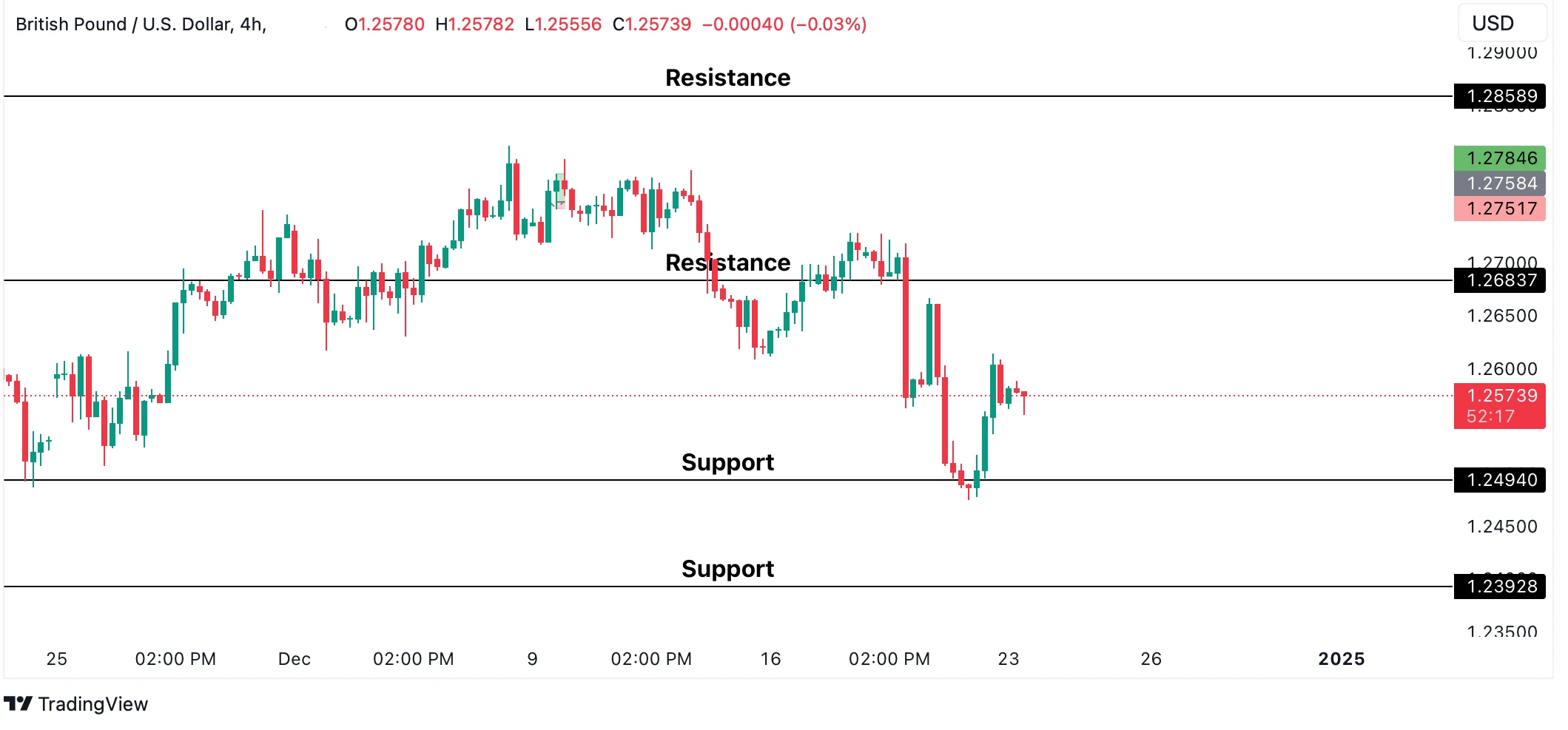
Pound – Dollar (GBP/USD)
Image Source: TradingView | For Illustrative Purposes Only
GBP/USD is clearly in a downtrend across both the daily and 4-hour timeframes, making selling opportunities more favourable. Given the prevailing bearish momentum, it is advisable to focus on short positions. The nearest resistance levels are at $1.26837 and $1.28589, while key support levels to watch are at $1.24940 and $1.23928.
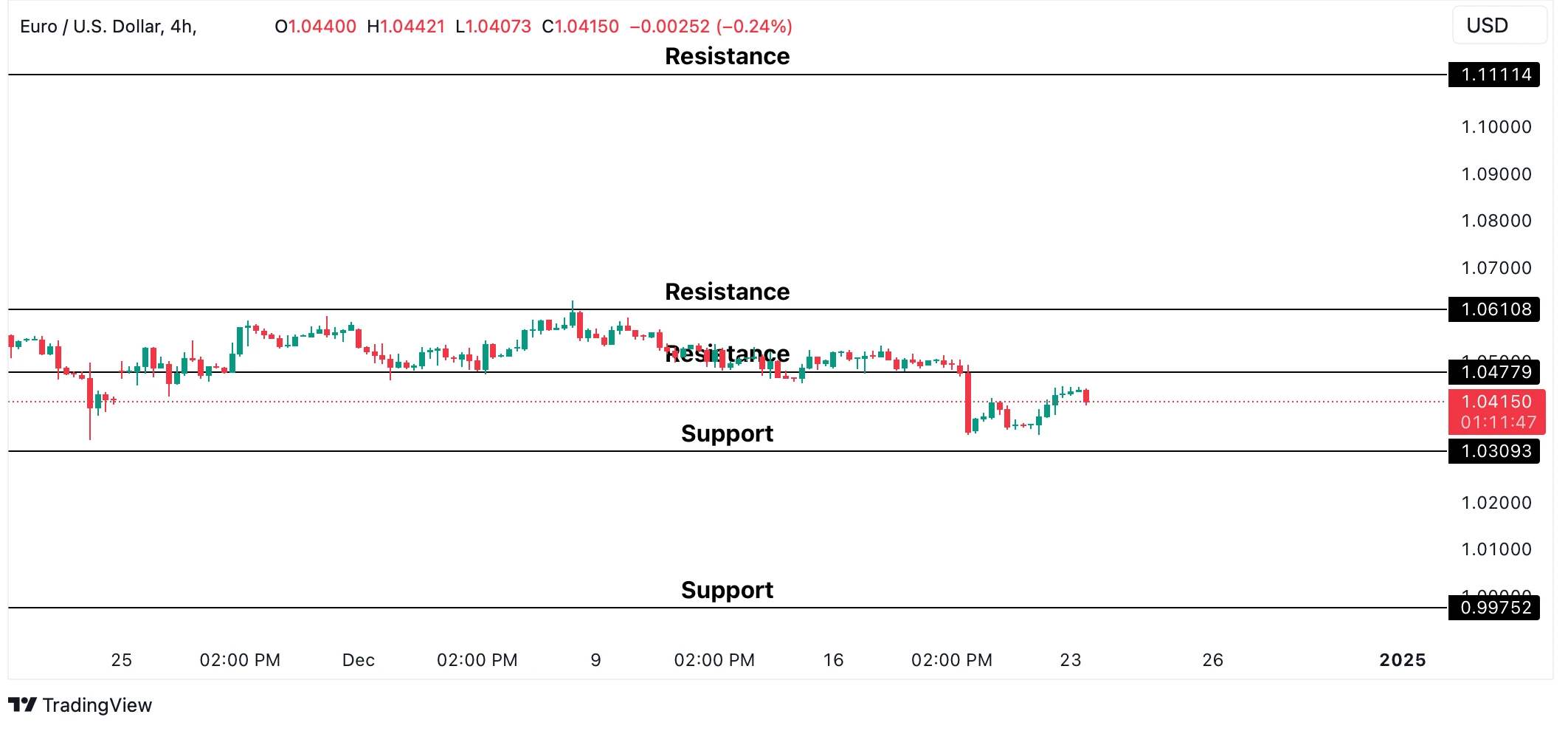
Euro – Dollar (EUR/USD)
Image Source: TradingView | For Illustrative Purposes Only
EUR/USD has been in a steady downtrend since late September and is currently testing the key support around $1.03093. The outlook for the major currency pair remains strongly bearish across all timeframes. It is advisable to wait for buying opportunities at support levels, with the target near resistance.
The nearest support is around the $1.03 round number level, and if this level fails to hold, the pair could drop to the next round number at $1. On the upside, the nearest resistance targets are $1.04779 and $1.06108.
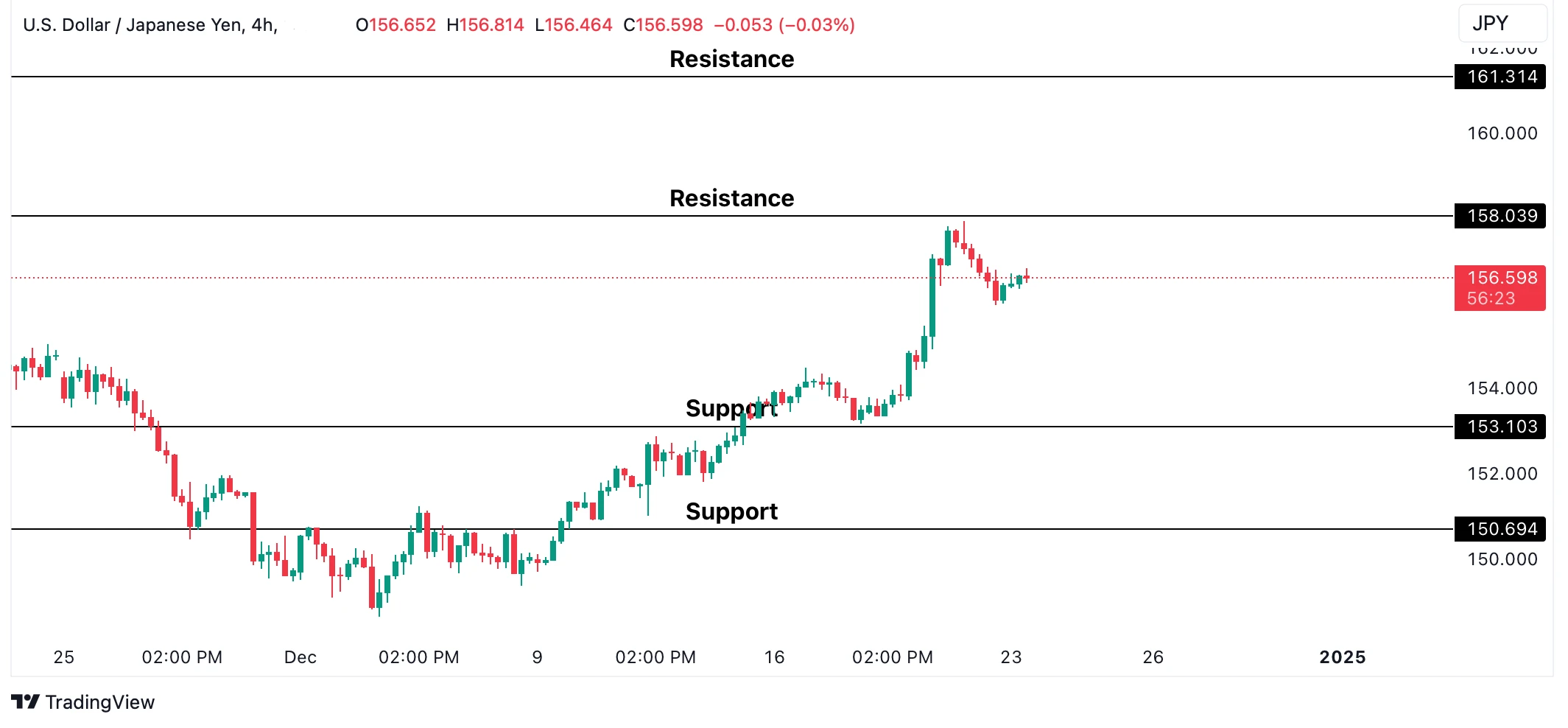
Dollar – Yen (USD/JPY)
Image Source: TradingView | For Illustrative Purposes Only
USD/JPY has resumed its uptrend, with the larger trend across the weekly, daily, and 4-hour timeframes showing strong bullish momentum. From a technical standpoint, entering buy positions at key support levels is advisable. Fundamentally, the BOJ’s current stance of maintaining interest rates, coupled with uncertainty around the timing of any future rate hikes, supports the prevailing upward momentum.
However, if the BOJ does proceed with an anticipated rate hike, this could lead to a stronger JPY, potentially causing USD/JPY to reverse and correct lower. It is important to stay alert to economic data and the BOJ’s next meeting to assess any changes in their policy stance. The nearest support for USD/JPY is around ¥154.103 and ¥150.694, while key resistance levels are found at ¥158.039 and ¥161.314.