


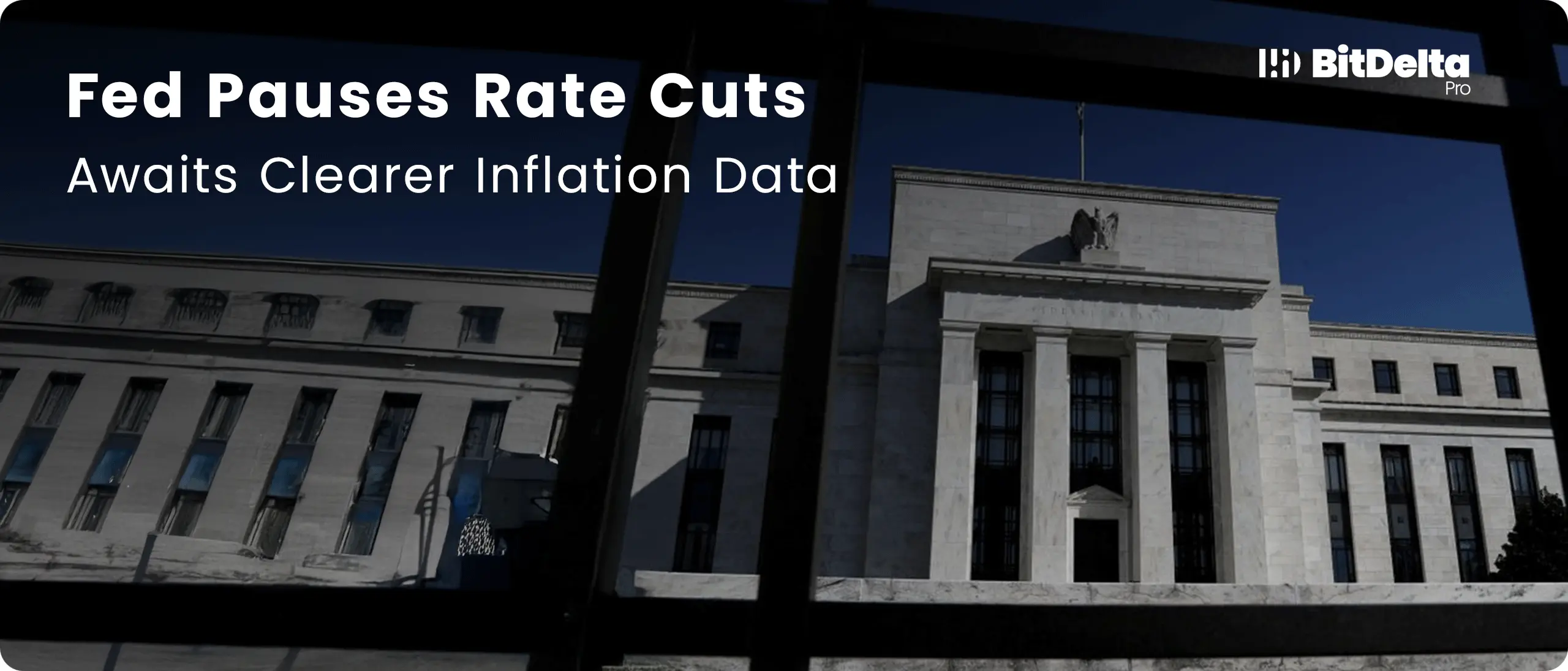
The Federal Reserve has reinforced its cautious stance on monetary policy, indicating that further interest rate cuts will be postponed until there is more definitive evidence of inflation trends. Following the December meeting, the Fed implemented its third consecutive 0.25% rate reduction, lowering the benchmark rate percentage to a range of 4.25 to 4.5. However, the decision was characterised as a “close call”, with some officials favouring maintaining the current rates.
The minutes from the FOMC meeting released yesterday provided further insights into the Fed’s thinking. Policymakers emphasised the need for a careful and>Market Reactions and Economic Outlook
Following the release of the FOMC minutes, US stock markets showed mixed reactions. The Nasdaq-100 dipped by 0.07%, reflecting ongoing concerns about economic challenges and a slower-than-expected disinflation process. Economic slowdowns or uncertainty can particularly impact technology stocks in the Nasdaq, as these companies tend to be more sensitive to changes in market conditions.
Meanwhile, the S&P 500 rose by 0.16%, marking its fifth positive close of the year, as investors welcomed signs that inflationary pressures might be stabilising. The Dow Jones also saw a modest gain of 0.25%, supported by the steady performance of blue-chip stocks.
The Fed’s cautious stance will likely contribute to increased market volatility in the near term. Rising bond yields without corresponding positive economic data could weigh on equity markets. Bond yield trends will be a critical factor to watch, as they have the potential to significantly influence market dynamics.
Economic Data and Global Tensions
Critical economic data, such as US employment figures and inflation reports, will be pivotal in shaping market sentiment. These indicators will clarify the global economic outlook amid ongoing uncertainties about the Fed policy and escalating US-China tech tensions. Recent US restrictions on AI chip exports to China have added to market caution, with potential ripple effects being closely monitored.
Opportunities Amid Caution
The market has largely priced in the Fed’s slower pace of rate cuts, as well as concerns about potential tariff-induced inflation under the Trump administration. While bond yields may have limited room to rise further, the current market pullback could present a buying opportunity, particularly in US bonds and large-cap stocks. The US economy remains robust, supporting a favourable investment environment.
Technical Analysis
S&P 500
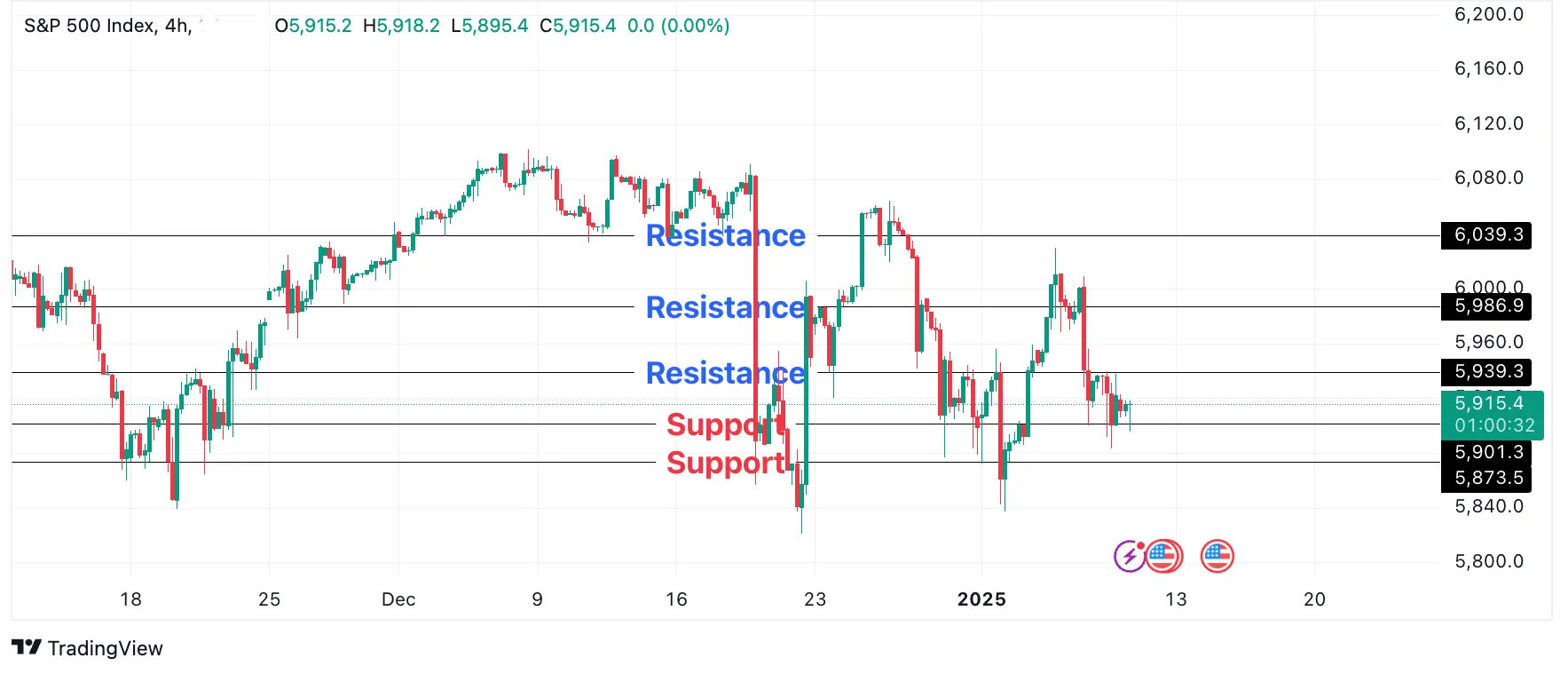
Image Source: TradingView | For Illustrative Purposes Only
| S1: $5,901 | R1: $5,940 |
| S2: $5,873 | R2: $5,986 |
NASDAQ-100
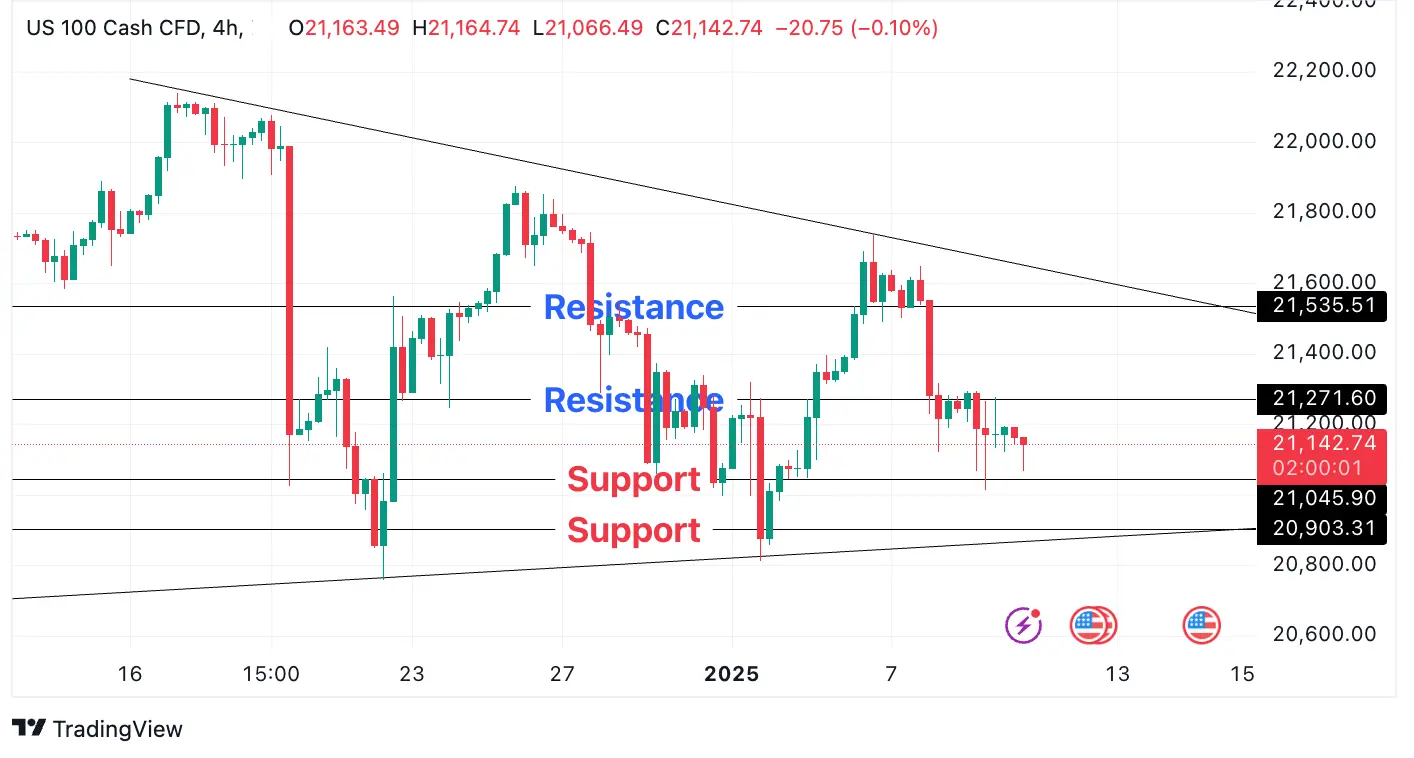
Image Source: TradingView | For Illustrative Purposes Only
| S1: $21,045 | R1: $21,271 |
| S2: $20,903 | R2: $21,535 |
2026. All rights reserved. This communication is for informational and educational purposes only and should not be construed as financial, investment, or legal advice. BitDelta does not guarantee the accuracy, completeness, or timeliness of the information provided. Trading in cryptocurrency markets involves substantial risk, including the potential loss of your entire investment. Users are advised to conduct their own research, exercise caution, and seek independent financial advice before making any trading decisions. BitDelta is not liable for any losses or damages arising from actions taken based on this communication.
 Announcements

