


The Federal Open Market Committee (FOMC) meeting on Wednesday, December 18, is expected to be a key event this week, with a widely anticipated 25-basis point interest rate cut. Recent economic indicators, including the November jobs report and inflation data, suggest the Fed is navigating a shifting economic landscape. With inflation showing signs of moderation and the economy facing potential headwinds, this rate adjustment reflects the Fed’s ongoing effort to balance growth and manage inflationary pressures.
Last week’s inflation numbers have influenced this rate change, with both the CPI and the PPI meeting expectations and showing no significant surprises. Additionally, a slight uptick in unemployment has reinforced the view that the labour market is no longer an important driver of inflation. With the Fed already projecting two rate cuts in 2024, one of which was implemented in November, the market is now pricing in a 95% likelihood of another 25-basis point reduction in December, likely concluding the Fed’s easing cycle for the year.
2025: A Shift Towards Caution and Measured Easing
While December’s rate cut seems almost certain, the path ahead in 2025 is clouded with uncertainty. Inflation has cooled, but progress has slowed in recent months, making the disinflation trajectory harder to predict. Adding to this uncertainty are potential shifts in fiscal, trade, and immigration policies, which could complicate the Fed’s efforts to reach a neutral interest rate—a level that neither stimulates nor restricts economic activity.
Considering these complexities, the Fed’s updated December dot plot is expected to signal a more cautious approach to future rate cuts. Analysts are forecasting 2-3 cuts in 2025, with the federal funds rate potentially settling in the 3.5% to 4% range by the end of the year.
A Delicate Balance for the Road Ahead
As the Federal Reserve faces these challenges, its monetary policy decisions will be closely watched. The market will pay close attention to external factors—such as fiscal policy changes and global trade dynamics—that could influence the Fed’s approach. The coming year will likely see a more measured, cautious stance as the Fed seeks to support sustainable growth while avoiding inflationary pressures.
Global Central Banks Move Towards a Neutral Policy Stance
The trend towards neutral monetary policy is not confined to the US. Other central banks are also adjusting their rates to strike a similar balance. The BOC made a bold move last week, cutting its policy rate by 0.5% to 3.25%, now at the top of its neutral range. This follows a swift 1.75% rate reduction over the past six months, the fastest pace among advanced economies.
Meanwhile, the ECB lowered its rates by 0.25%, bringing the policy rate to 3%, while Switzerland’s central bank surprised markets with a 0.5% reduction—the largest in nearly a decade. This week, all eyes will be on the FOMC meeting on Wednesday, December 18, while the BOE and BOJ are also in focus, with both expected to hold rates steady on Thursday, December 19.
Technical Analysis
GBP/USD
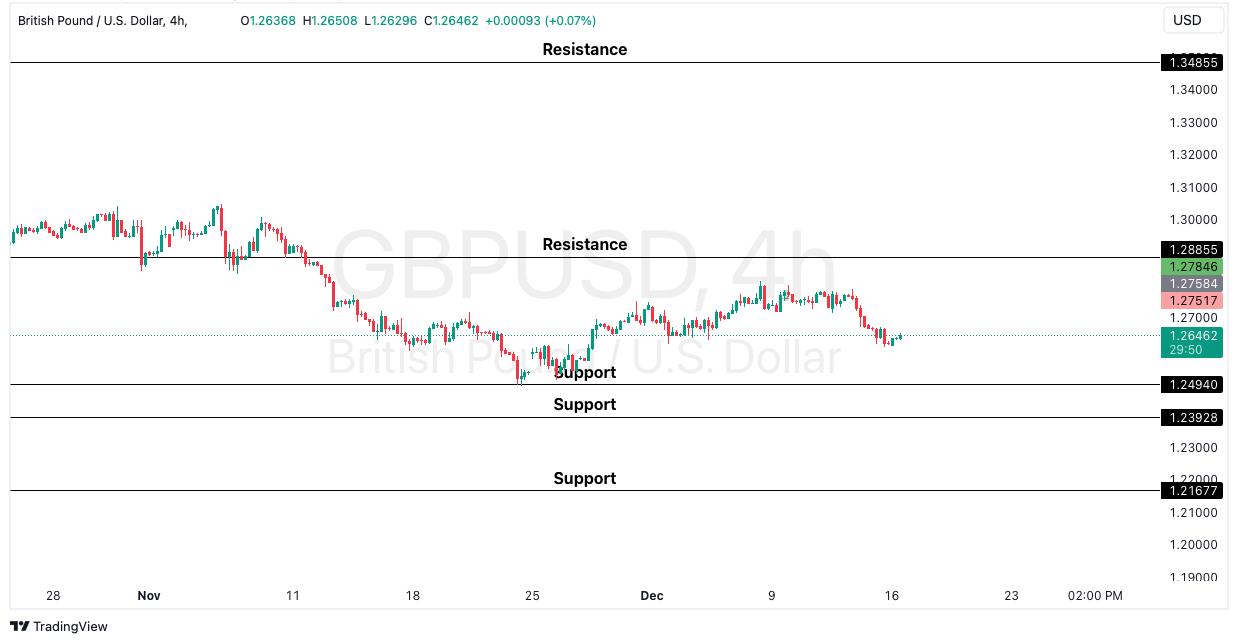
Image Source: TradingView
From a technical standpoint, GBP/USD is experiencing a strong bearish trend on the daily timeframe. In the near term, it is advisable to consider short positions around the resistance level, as the prevailing market sentiment favours further downside movement. However, for those looking to enter long positions, the safer entry point would be at the support level of $1.21677. This level may offer a more favourable risk-to-reward ratio should the price test and hold this area.
USD/JPY
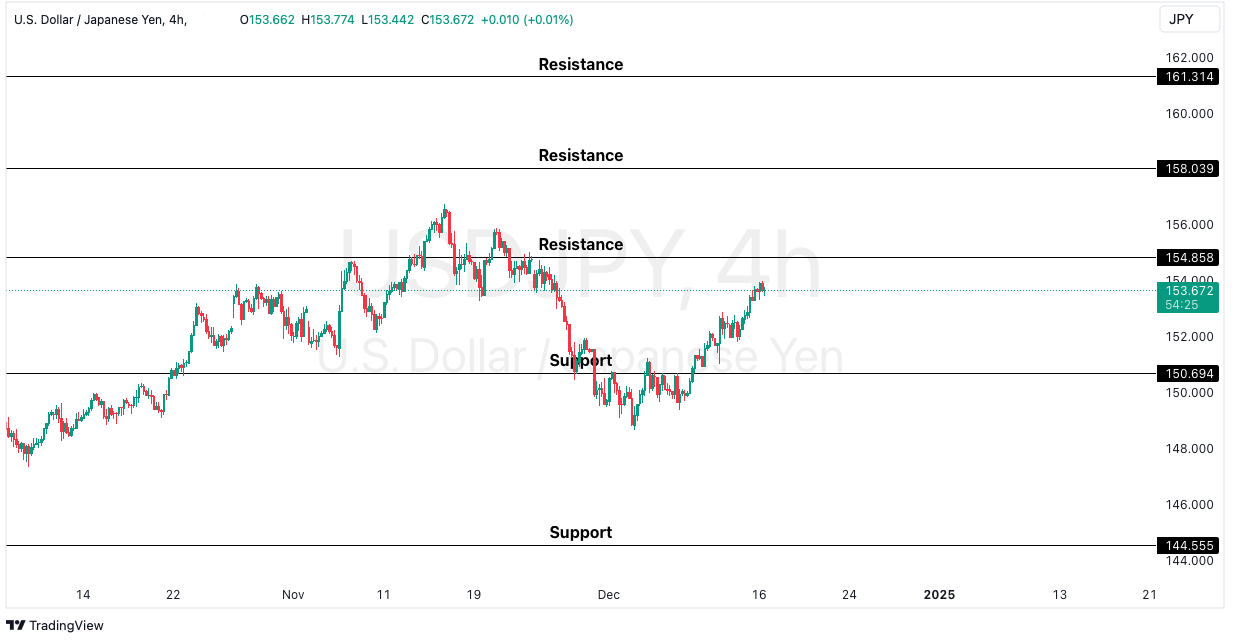
Image Source: TradingView
From a technical perspective, USD/JPY will likely trade within a consolidative range this week as the market awaits key news from the BOJ and the Fed. A move towards the resistance level at ¥154.858 is possible, but a corrective pullback is expected afterwards.
The prevailing market bias remains tilted towards short positions in the near term, with the potential for a move down. Should the price test and hold this level, a buying opportunity could arise around the support zone at ¥150.694. A decisive break below ¥150.694 would signal a shift in market sentiment, increasing the likelihood of further downside and potentially targeting the next support at ¥144.5.
2026. All rights reserved. This communication is for informational and educational purposes only and should not be construed as financial, investment, or legal advice. BitDelta does not guarantee the accuracy, completeness, or timeliness of the information provided. Trading in cryptocurrency markets involves substantial risk, including the potential loss of your entire investment. Users are advised to conduct their own research, exercise caution, and seek independent financial advice before making any trading decisions. BitDelta is not liable for any losses or damages arising from actions taken based on this communication.
 Announcements

