Crude oil prices remain volatile as global markets react to shifting geopolitical dynamics and evolving trade policies. WTI crude currently trades around $72 per barrel, while Brent crude holds above $75 per barrel. Market participants are treading cautiously, assessing how macroeconomic conditions, geopolitical risks, and trade disputes will shape future demand and supply dynamics.
The Russia-Ukraine Factor
A major catalyst in market sentiment is the potential peace plan between Russia and Ukraine, with reports suggesting an Easter ceasefire is under discussion. If negotiations progress, the easing of sanctions on Russian oil exports could inject additional supply into global markets. Russia’s willingness to engage in diplomatic talks introduces another layer of complexity, as any resolution could shift energy trade flows and influence pricing structures.
However, broader geopolitical uncertainty persists. Market participants are closely watching Western responses, particularly regarding future sanctions policies and energy security concerns. A partial lifting of restrictions on Russian crude could create short-term supply-side pressure, though the long-term impact will depend on how quickly European and Asian buyers reintegrate Russian oil into their supply chains.
China’s Strategic Countermeasures
Beyond geopolitics, US-China trade relations continue to shape the energy market. China has imposed a new 10% tariff on US crude oil imports and a 15% border tax on coal and LNG, effective today, February 10. This move is widely seen as a strategic countermeasure against broader US trade policies, reinforcing China’s push to diversify energy sources and reduce reliance on American crude.
Additionally, China has implemented export restrictions on 25 rare metals, escalating tensions beyond energy and into the technology supply chain. Given China’s position as a key crude importer, prolonged trade friction could alter global crude flows, forcing US producers to seek alternative buyers while strengthening Russia’s and the Middle East’s influence in China’s energy market.
America’s Moderate Oil Production
Despite political pressure to boost US oil output, supply-side realities show a more complex picture. US crude oil production is expanding at a measured pace, increasing by 300,000 barrels per day, but market indicators show no signs of accelerating drilling activity. This cautious approach from US producers reflects several key constraints:
- Challenging market fundamentals amid persistent inventory builds
- Rising capital costs in a bearish price environment
- Regulatory uncertainty affecting long-term investment decisions and export planning
This hesitation to increase production, despite administrative pressure, reflects a wider industry focus on profitability and operational efficiency rather than volume growth. The gap between political calls for higher output and market realities suggests US producers will likely maintain their disciplined approach unless more sustainable price support emerges.
Trade Policy and Economic Implications
Markets are also closely monitoring potential US trade policy shifts. President Donald Trump has signalled further action on “reciprocal trade” measures, which could introduce new tariffs affecting key trading partners. According to the Tax Foundation, such tariffs could:
- Disrupt global supply chains, indirectly influencing oil demand
- Impact household finances, altering consumption patterns
- Shift economic growth trajectories, potentially reducing global oil consumption
As energy-intensive industries adjust to these policies, oil demand forecasts may undergo downward revisions, reinforcing concerns about long-term demand stability.
US Sanctions and Pressure on Iran
Another critical factor influencing oil markets is the ongoing US sanctions on Iran. Last week, the US administration ramped up its “maximum pressure on Iran” policy by announcing sanctions against an international network facilitating the shipment of Iranian crude to China. These measures also targeted individuals and tankers transporting Iranian oil.
While the US has focused on curbing Iranian exports, the geopolitical ramifications of such sanctions are far-reaching. Iran continues to seek alternative markets for its oil, with efforts to bypass sanctions and maintain its export capacity. As these sanctions restrict supply, they add volatility to the global energy market, particularly in the context of global oil demand uncertainties. Moreover, Iran’s influence on oil prices remains significant, with potential shifts in oil flows having broad implications for pricing, particularly in Asian markets where Iranian crude has been a key source.
Key Price Drivers in Focus
Several factors continue to shape crude oil price movements:
- Ongoing US-China trade tensions and retaliatory measures
- Potential adjustments to Russian oil sanctions amid peace discussions
- Shifts in global energy supply chains and geopolitical alliances
- The oil industry’s cautious approach to increasing output
- Upcoming US economic data releases that could influence demand outlooks
- The ongoing US sanctions on Iranian oil and its market impact
Technical Analysis
Oil prices are likely to face continued downward pressure unless significant new bullish catalysts emerge, particularly in a market environment characterised by heightened uncertainty from geopolitical factors and trade policy dynamics.
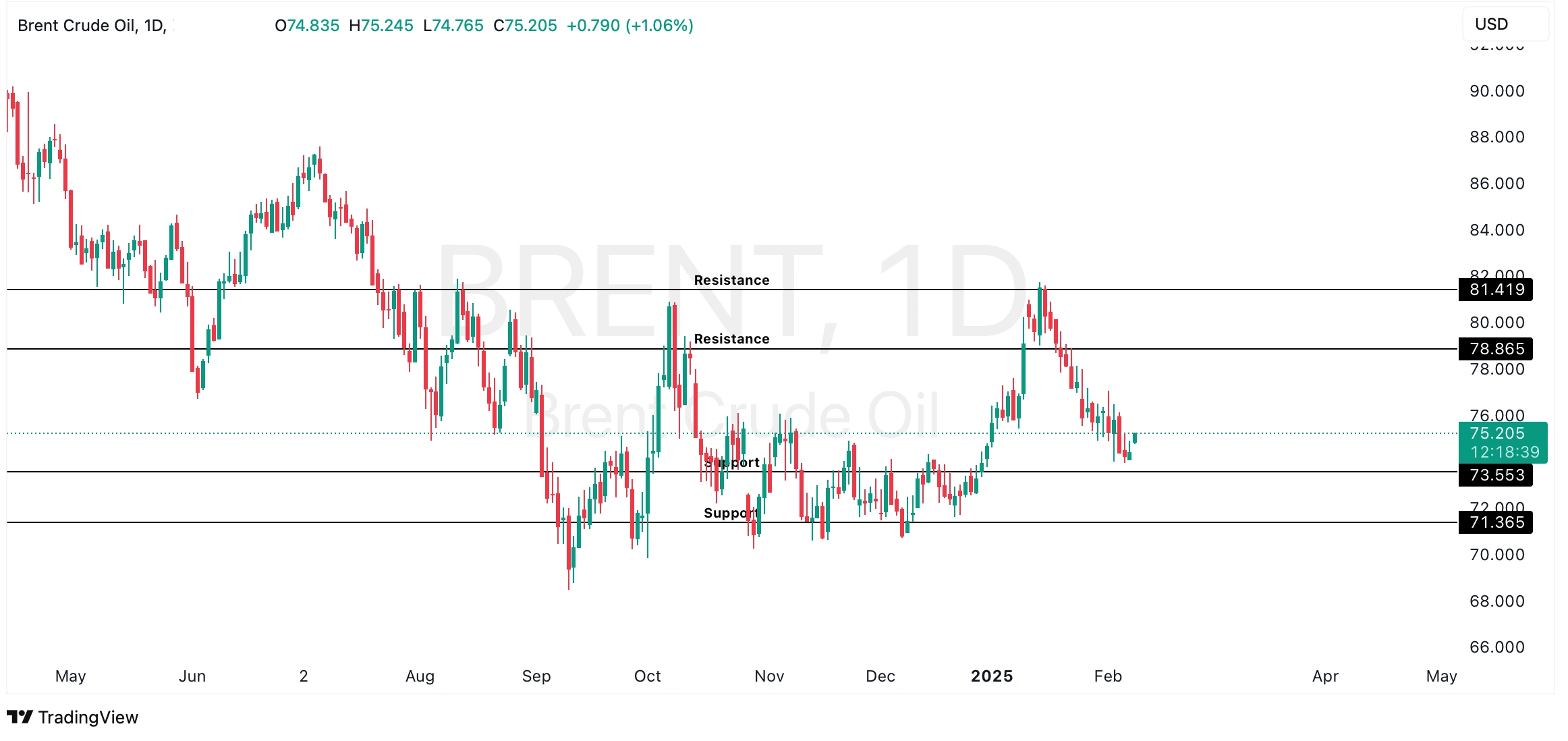
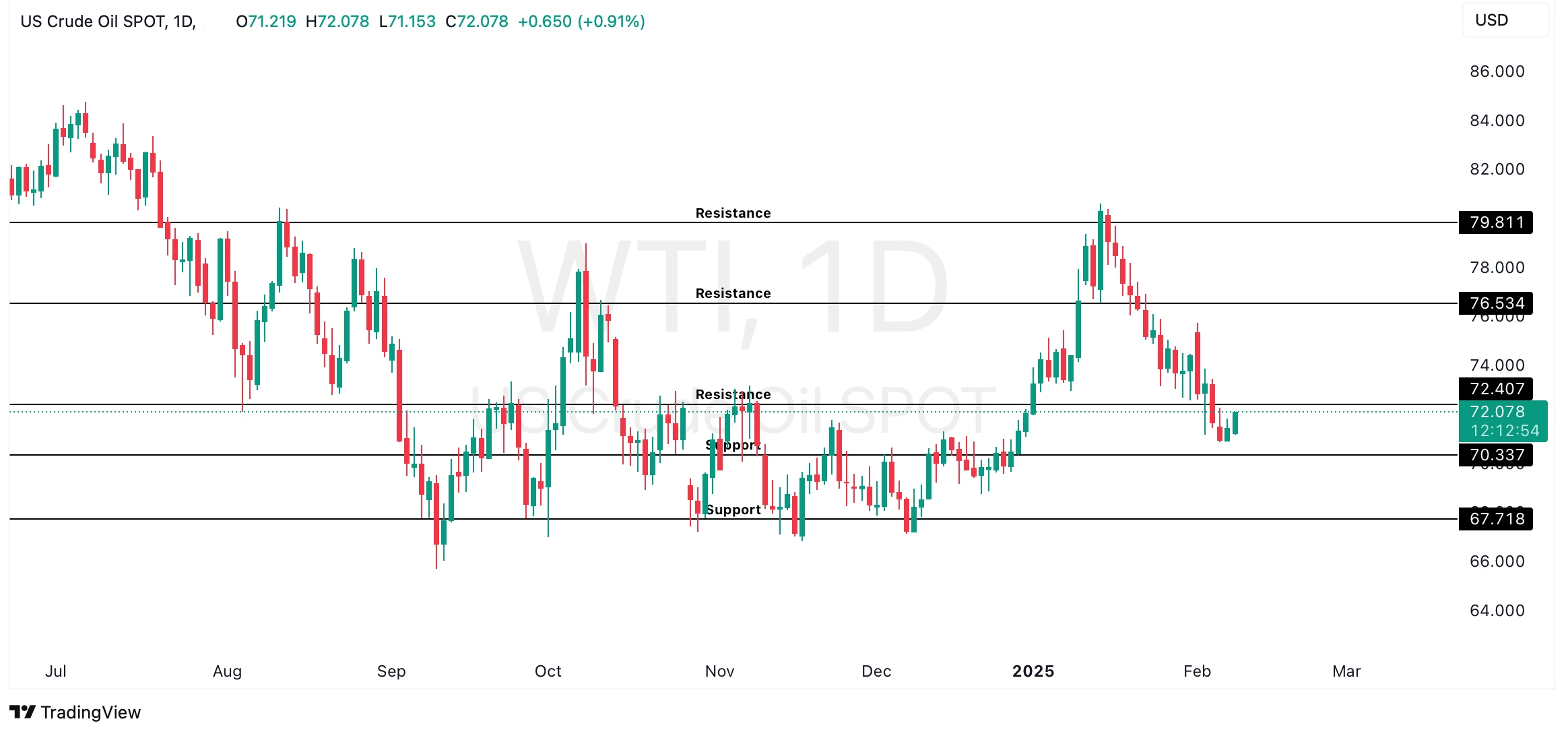
Source: TradingView | For Illustrative Purposes Only
2026. All rights reserved. This communication is for informational and educational purposes only and should not be construed as financial, investment, or legal advice. BitDelta does not guarantee the accuracy, completeness, or timeliness of the information provided. Trading in cryptocurrency markets involves substantial risk, including the potential loss of your entire investment. Users are advised to conduct their own research, exercise caution, and seek independent financial advice before making any trading decisions. BitDelta is not liable for any losses or damages arising from actions taken based on this communication.
 Announcements